
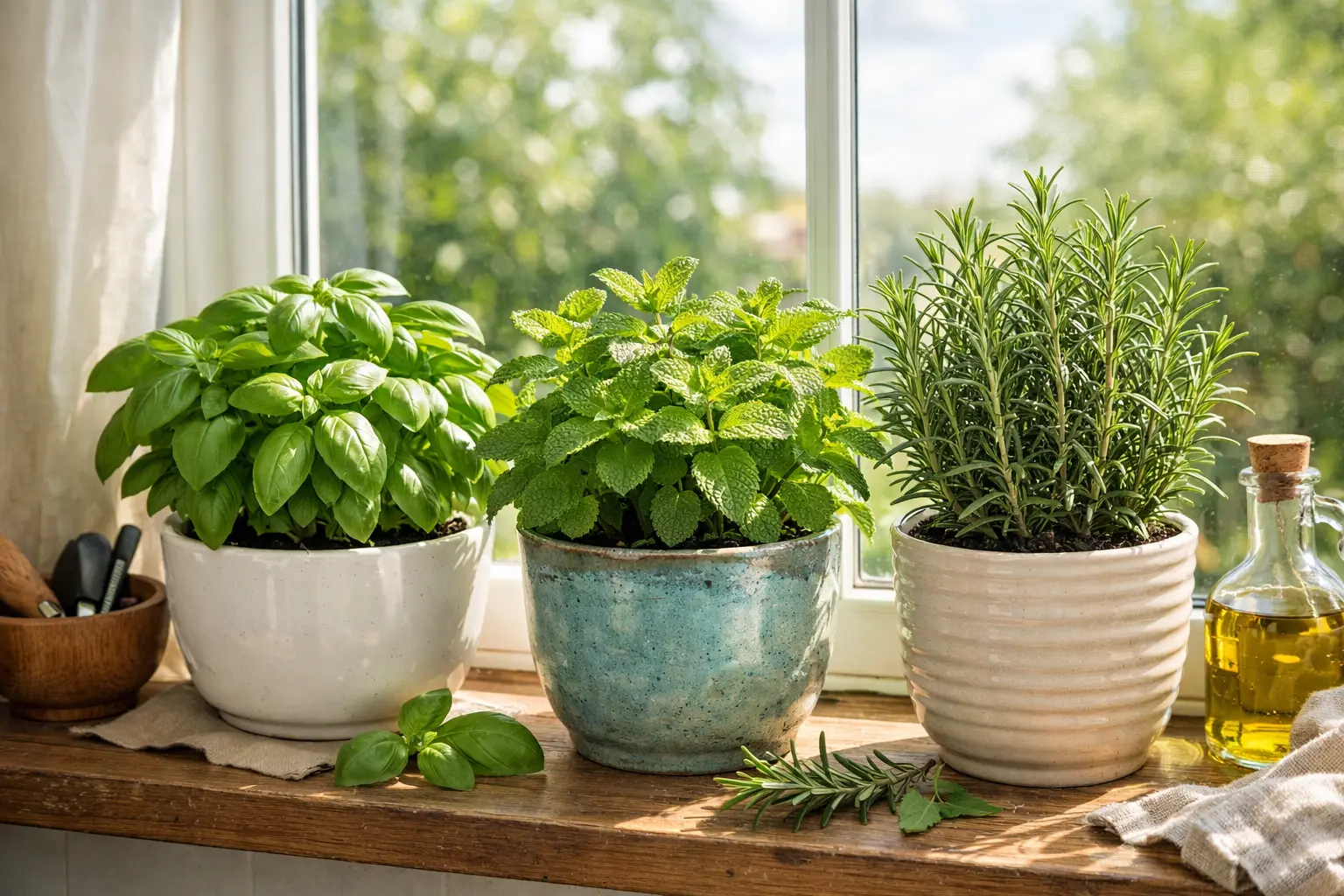
Why Start Indoor Herb Gardening
Indoor herb gardening brings fresh flavor and aroma into your kitchen while saving money. It fits apartments, small homes, and busy schedules.
This guide covers the essentials for successful indoor herb gardening so you can harvest healthy herbs year round.
Key Supplies for Indoor Herb Gardening

Start with a compact kit of the right supplies to avoid common beginner mistakes. Good tools make care simple.
- Pots with drainage holes
- Quality potting mix formulated for containers
- Herb seeds or small starter plants
- Tray or saucer to catch excess water
- Grow light if natural light is limited
- Simple hand tools: shears and a small trowel
How to Choose Herbs for Indoor Herb Gardening
Pick herbs that are forgiving and suited to indoor conditions. Some herbs need more light than others.
Best Herbs for Beginners
- Basil – loves sunlight and warm indoor temps
- Mint – tolerant of lower light and easy to propagate
- Rosemary – prefers bright light and good drainage
- Parsley – slow growing but resilient
- Chives – compact and well suited to pots
Setting Up Pots and Soil
Use containers with drainage to prevent root rot. Pot size depends on the herb, but most do well in 4 to 8 inch pots.

Choose a well draining potting mix with organic matter. Avoid heavy garden soil that compacts in containers.
Light Requirements for Indoor Herb Gardening
Light is the single most important factor for healthy herbs. Place plants near a south or west facing window for best results.
When to Use Grow Lights
Use a full spectrum LED grow light when natural light is less than 4 to 6 hours per day. Keep lights 6 to 12 inches above plants and on a 12 to 14 hour schedule.
Watering and Fertilizing

Overwatering is a frequent mistake. Water when the top inch of soil is dry to the touch, and empty saucers after watering.
- Check soil moisture with your finger
- Water slowly until excess drains out
- Feed with a balanced liquid fertilizer every 4 to 6 weeks during active growth
Pruning, Harvesting, and Care
Regular harvesting encourages bushier growth. Snip stems above a leaf node rather than pulling leaves off.
Prune to shape plants and remove any yellowing leaves. Watch for pests such as aphids and treat early with insecticidal soap.
Troubleshooting Common Problems in Indoor Herb Gardening
Yellow leaves often mean overwatering or poor light. Leggy growth usually indicates insufficient light.
- Pests: inspect undersides of leaves and isolate affected plants
- Root rot: reduce watering and repot if soil smells sour
- Slow growth: check light levels and consider feeding
Herbs grown indoors can be up to three times more flavorful than store-bought herbs because you harvest them fresh and use them immediately.
Simple Weekly Care Routine
Keep care manageable with a short weekly routine. Regular checks prevent small issues from becoming failures.
- Inspect plants for pests and health
- Water based on soil moisture, not schedule
- Rotate pots for even light exposure
- Harvest a third of new growth to encourage branching
Real World Example: Small Apartment Success
Case study: Sarah, a city apartment renter, started indoor herb gardening on a sunny windowsill. She chose basil, chives, and mint in 4 inch pots and used a lightweight potting mix.
After two months she had a steady supply of herbs, used less packaged herbs, and reported spending about 10 minutes three times a week on care. Sarah estimated saving 80 to 120 dollars a year on herbs and enjoyed the improved flavor in home cooking.
Advanced Tips for Indoor Herb Gardening
For better yields, try these small upgrades. They are inexpensive but effective.
- Use a humidity tray or group plants to raise local humidity
- Pinch off flowers to keep herbs focused on leaf production
- Start new plants from cuttings to expand your garden cheaply
Wrap Up and Next Steps
Indoor herb gardening is low cost and high reward. With basic supplies and a short care routine you can enjoy fresh herbs year round.
Start with two or three herbs, learn their light and water needs, and expand as you gain confidence. Small, steady steps lead to a thriving indoor herb garden.