
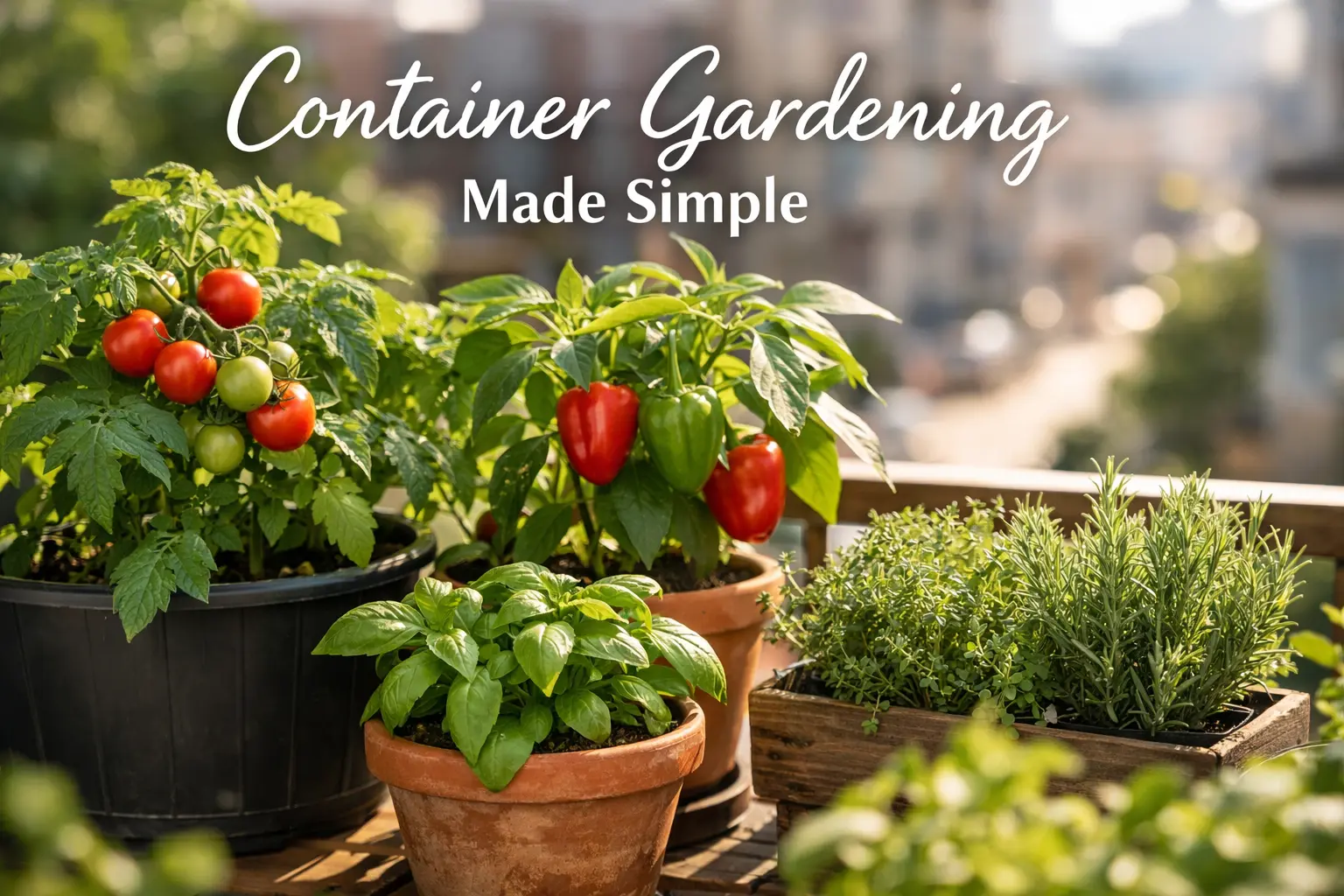
Why Container Gardening for Beginners Works
Container gardening is one of the simplest ways to start growing food if you lack yard space. It reduces soil-borne problems and makes care tasks like watering and fertilizing more controllable.
This approach suits balconies, patios, windowsills, and small yards. With the right containers and lightweight soil, even a small collection of pots can produce significant harvests.
Getting Started: Choose the Right Containers

Container type affects root health, drainage, and plant size. For most vegetables, pick containers at least 12 inches deep and wide.
- Plastic pots: Lightweight and retain moisture well.
- Ceramic or terracotta: Porous and attractive but dry out faster.
- Fabric grow bags: Good breathability and root health.
- Wooden boxes: Durable and insulative if lined with landscape fabric.
Always ensure containers have drainage holes. If they don’t, drill holes or add a drainage layer of coarse gravel before planting.
Container Gardening for Beginners: Which Plants to Start With
Choose plants that are compact and forgiving. Start with tried-and-true varieties suited to containers and your climate.
- Leafy greens: Lettuce, spinach, arugula — fast and harvestable in cut-and-come-again style.
- Herbs: Basil, parsley, chives — small and useful in the kitchen.
- Compact tomatoes: Patio or determinate types in 5-gallon containers.
- Peppers and dwarf beans: Manageable size and steady yields.
Soil and Potting Mix for Container Success

Use a commercial potting mix labeled for containers rather than garden soil. Potting mixes are lighter and drain better.
Consider mixes containing peat moss or coco coir, perlite, and compost. These hold moisture and nutrients while allowing air to reach roots.
Container Gardening for Beginners: How to Plant
Follow simple steps to plant correctly and reduce transplant shock.
- Fill the container two-thirds with potting mix.
- Place your plant or seed according to depth instructions on the label.
- Backfill with mix and press gently to remove large air pockets.
- Water thoroughly until water drains from the bottom.
Watering and Fertilizing in Containers

Containers dry out faster than garden beds, so check moisture daily in hot weather. The finger test works well: stick a finger an inch into the mix to judge moisture.
Use a balanced, water-soluble fertilizer every 1–2 weeks for vegetables, or apply slow-release granules at planting for low-maintenance care.
Practical Watering Tips
- Water in the morning to reduce evaporation and fungal risk.
- Use saucers under pots to protect surfaces, but avoid standing water that causes root rot.
- Consider a self-watering container or drip setup for extended trips.
Sunlight and Placement
Most vegetables need 6–8 hours of direct sun. Observe your space for the brightest spots and rotate containers every week for even growth.
Partial shade plants like lettuce and herbs can thrive with 3–5 hours of sun or bright, indirect light.
Simple Pest and Disease Management
Containers reduce some pest pressures but still require monitoring. Inspect leaves weekly for insects, spots, or wilting.
- Handpick larger pests like slugs and caterpillars.
- Use insecticidal soap for soft-bodied insects such as aphids.
- Remove yellowing foliage promptly to prevent disease spread.
Troubleshooting Common Problems
Yellow leaves often point to overwatering, poor drainage, or nutrient deficiency. Reassess watering and consider repotting with fresh potting mix.
Slow growth may indicate insufficient light or cramped roots. Move the container to a sunnier spot or upgrade to a larger pot.
Seasonal Care and Crop Rotation
Change crops seasonally to avoid pest build-up and soil depletion. Fall is a good time to remove old plants, refresh soil, and plan cool-season greens.
In colder climates, move containers to a protected spot or wrap pots with insulating material to protect roots from freezing.
Plants in containers can need up to 10 times more frequent watering than the same plants in garden beds because pots dry out faster in warm weather.
Short Real-World Case Study
Case study: Sarah, a city apartment dweller, converted a 4-foot balcony into a container garden. She used four 5-gallon pots for tomatoes and peppers and two window boxes for herbs and lettuce.
By choosing determinate tomato varieties and a weekly feeding schedule, she harvested fresh salad greens and several pounds of tomatoes over one summer. Regular monitoring for water and sun, plus a simple trellis for support, kept plants productive.
Starter Checklist for Container Gardening for Beginners
- Choose 12-inch or larger containers with drainage holes.
- Buy quality potting mix and a balanced fertilizer.
- Select compact vegetable varieties for containers.
- Place containers in a spot with appropriate sunlight.
- Water consistently and check moisture daily in heat.
- Monitor for pests and rotate crops seasonally.
Final Tips
Start small and expand as you gain confidence. Successful container gardening depends on regular attention rather than large space or complex tools.
Keep a simple journal of planting dates, varieties, and feeding schedule to improve results each season.