
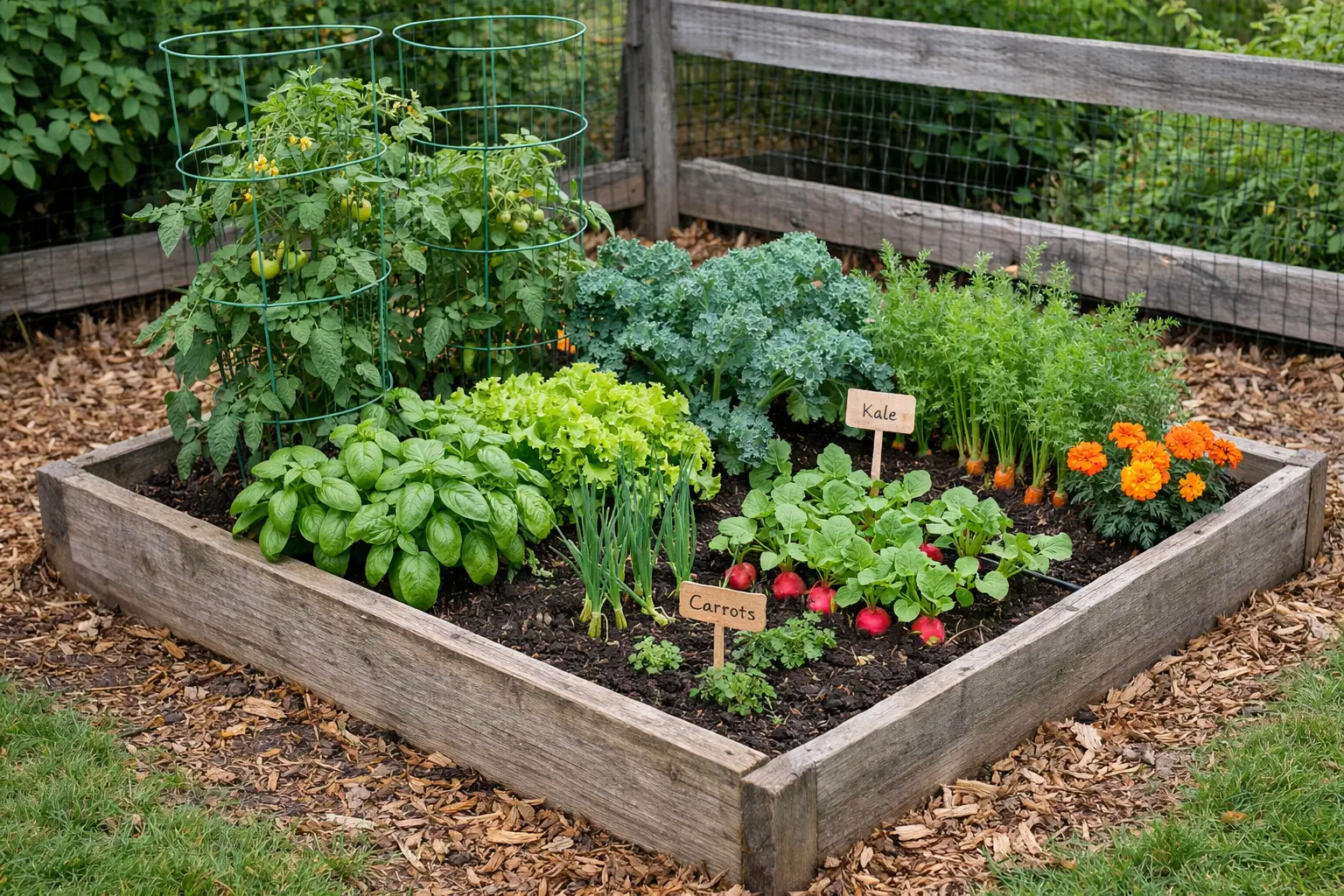
Why start a small vegetable garden
Growing your own vegetables is practical, affordable, and rewarding. A small vegetable garden fits into patios, balconies, and tiny backyards, and it can supply fresh greens and herbs through the growing season.
This guide shows clear steps to plan, build, plant, and maintain a small vegetable garden so you get reliable results without unnecessary work.
Plan Your Small Vegetable Garden

Decide location, size, and goals before digging. Even a 4 x 4 foot raised bed or a set of containers can be highly productive.
Consider sunlight, access to water, and convenience when choosing a spot. Most vegetables need at least 6 hours of direct sun daily.
Choose the right size and layout
Start small and expand later. Common beginner options:
- One 4 x 4 ft raised bed (good for 9–16 plants).
- Three to five 10–20 inch containers for herbs and salad greens.
- A vertical rack or trellis for beans and cucumbers in tight spaces.
Pick the best vegetables for small gardens

Choose compact, high-yield, and fast-maturing crops. Good choices include:
- Leafy greens: lettuce, spinach, kale.
- Herbs: basil, parsley, chives.
- Compact fruiting plants: cherry tomatoes, dwarf peppers.
- Vining crops trained vertically: pole beans, cucumbers.
Prepare Soil and Beds for a Small Vegetable Garden
Soil quality is the most important factor. In small gardens, you can control soil easily by building raised beds or using quality container mix.
Soil mix and amendments
For raised beds, aim for a loamy mix: roughly 40% topsoil, 40% compost, 20% coarse sand or perlite for drainage. For containers, use a commercial potting mix with added compost.

Add 2–3 inches of compost before planting, and mix in a balanced organic fertilizer if needed.
Planting and Spacing in a Small Vegetable Garden
Proper spacing reduces disease and increases yield. Use block planting rather than long rows to maximize space.
Seed vs seedlings
Start fast-growing crops from seed directly (radishes, lettuce). Use seedlings for tomatoes and peppers to get an earlier harvest.
Succession planting and companion planting
Succession planting keeps harvests steady. For example, sow lettuce every 2–3 weeks. Companion planting can improve space use—plant basil near tomatoes to save room and help flavor.
Watering and Feeding a Small Vegetable Garden
Consistent water and feeding are crucial. Small gardens dry out faster, so check moisture daily, especially in warm weather.
- Water deeply 2–3 times per week rather than shallow daily sprinkling.
- Use drip irrigation or soaker hoses to save water and reduce leaf wetness.
- Feed with a balanced liquid fertilizer every 3–4 weeks during the growing season.
Pest and Disease Management for Small Vegetable Gardens
Small gardens allow close observation and quick action. Start with prevention, and use simple remedies if problems appear.
Prevention tips
- Rotate crops each season to reduce soil-borne diseases.
- Maintain good air circulation by not overcrowding plants.
- Inspect plants weekly and remove affected leaves promptly.
Low-toxicity controls
Use row covers to keep pests off young plants. Apply insecticidal soap or neem oil for soft-bodied pests. Handpick larger pests like slugs or caterpillars.
Harvesting and Extending the Season
Harvest regularly to encourage more production. Pick leafy greens at outer leaves and allow the center to continue growing.
Use simple season extenders like cloches, cold frames, or frost blankets to squeeze extra weeks out of the season.
Small Vegetable Garden Case Study
Case: Maria, a city renter, used a 4 x 4 ft raised bed on her small backyard patio. She planted three tomato seedlings, six lettuce heads, four pepper plants, and a trellis of pole beans.
In her first season she rotated lettuce every three weeks, harvested tomatoes from July to September, and produced enough salad greens for two people weekly. Her main costs were soil and compost ($120) and seedlings ($35), and she estimates a savings of about $200 in store-bought produce that season.
Quick Start Checklist for a Small Vegetable Garden
- Choose a sunny spot with easy water access.
- Pick a size you can manage—4 x 4 ft or containers for beginners.
- Use quality soil mix and add compost before planting.
- Select compact, fast-maturing crops and plan succession planting.
- Water deeply, feed monthly, and inspect weekly for pests.
- Harvest regularly and use covers to extend the season.
Final Tips for Success
Start small, track what works, and adapt. Take notes each season on what varieties performed well and when you harvested.
With basic planning and consistent care, a small vegetable garden can deliver fresh produce, reduce grocery bills, and give reliable satisfaction season after season.