
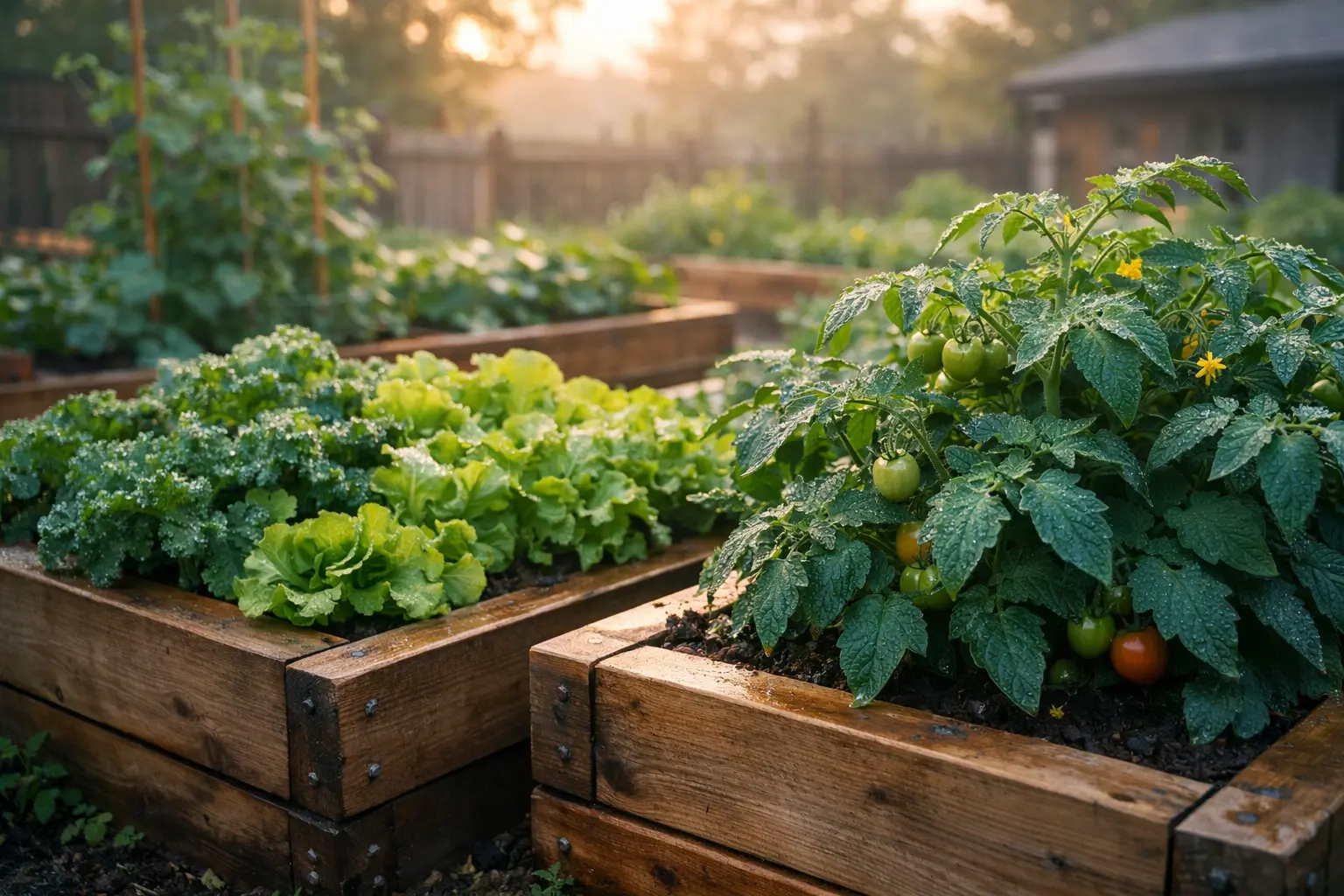
Why Start a Vegetable Garden
Starting a vegetable garden saves money and gives you fresh produce. It also connects you with seasonal cycles and can improve your diet.
This guide explains how to start a vegetable garden with practical steps you can follow in a weekend. No advanced tools or experience required.
Quick Plan to Start a Vegetable Garden

Create a simple plan before you dig. A clear plan reduces mistakes and helps you choose the right plants for your space.
- Decide location and bed type (in-ground, raised, or containers).
- Test or assess your soil and light.
- Pick easy vegetables for your climate and season.
- Gather tools and organic amendments.
Choosing a Location to Start a Vegetable Garden
Pick a spot that gets at least 6 hours of direct sun per day for most vegetables. Observe sun patterns for a few days to confirm light levels.
Consider proximity to water and how close the garden is to your home for daily care. Good drainage and easy access matter more than perfect sunlight in small spaces.
Soil and Bed Types for a Vegetable Garden

Soil is the most important factor when you start a vegetable garden. Good soil holds moisture, drains well, and feeds plants.
If your native soil is poor, raised beds or large containers let you control the mix. A basic bed mix is compost, topsoil, and a small amount of garden soil or coarse sand for drainage.
Essential Tools and Materials
You don’t need expensive gear to start a vegetable garden. A few basic tools will handle most tasks.
- Spade or shovel
- Garden fork or broadfork for loosening soil
- Hand trowel and cultivator
- Watering can or hose with a spray nozzle
- Compost or well-rotted manure
Selecting Vegetables When You Start a Vegetable Garden

Choose crops that match your taste and growing season. Beginners should start with fast, forgiving plants.
- Leafy greens: lettuce, spinach, chard
- Root crops: radish, carrot, beets
- Quick fruiters: bush beans, cherry tomatoes
- Herbs: basil, parsley, chives
Seed vs. Transplants
Seeds are cheaper and offer variety, but transplants give a head start and earlier harvests. Mix both approaches to extend yields.
Planting and Spacing Tips
Follow seed packet or plant tag spacing to avoid overcrowding. Overcrowded plants reduce airflow and increase disease risk.
Use succession planting to get continuous harvests. For example, sow lettuce every two weeks rather than all at once.
Watering and Feeding Your Garden
Water deeply and less often to encourage strong roots. Most vegetable beds need about 1 inch of water per week, adjusted for rainfall.
Apply compost at the start of the season and side-dress with compost or balanced organic fertilizer midway through heavy-producing crops like tomatoes and squash.
Mulch and Weed Control
Mulch with straw, leaves, or bark to retain moisture and suppress weeds. Mulch also keeps fruit off the soil and reduces rot.
Managing Pests and Diseases
Monitor plants weekly for pests and early signs of disease. Hand-pick large pests and use physical barriers like row covers for small insects.
Rotate crops yearly to reduce soil-borne diseases and avoid planting related species in the same spot each season.
Simple Seasonal Calendar to Start a Vegetable Garden
Follow a basic seasonal plan for most temperate climates. Adjust dates for your USDA zone or local frost dates.
- Spring: Prepare beds, sow cool-season crops, transplant hardy seedlings.
- Early summer: Plant warm-season crops and mulch heavily.
- Late summer: Sow fall greens and quick root crops.
- Autumn: Harvest, add compost, and cover soil for winter.
Home-grown tomatoes can have up to 25% more vitamin C than store-bought varieties because of fresher harvest timing. Growing close to harvest preserves nutrients and flavor.
Case Study: Small Urban Plot Success
A small 8-by-4 foot raised bed produced continuous harvests for a family of two in a full season. They planted staggered lettuce, two tomato plants, bush beans, and herbs.
Using a 50:50 mix of homemade compost and quality topsoil, daily morning watering, and a simple trellis for tomatoes, they harvested weekly salads and tomatoes through the season.
Common Mistakes When You Start a Vegetable Garden
New gardeners often make the same avoidable errors. Expect learning and adjust each season.
- Overplanting: Too many seedlings cause stress and poor yields.
- Inconsistent watering: Leads to blossom end rot and split fruit.
- Ignoring soil health: Skipping compost reduces fertility over time.
Final Checklist to Start a Vegetable Garden
- Map your garden and choose 3–6 starter crops.
- Prepare soil or raised bed with compost.
- Plant when soil temperature and frost dates are right.
- Water deeply, mulch, and monitor for pests weekly.
Starting a vegetable garden is a step-by-step process that rewards consistent care. Follow these practical steps and adjust to your local climate as you gain experience.