
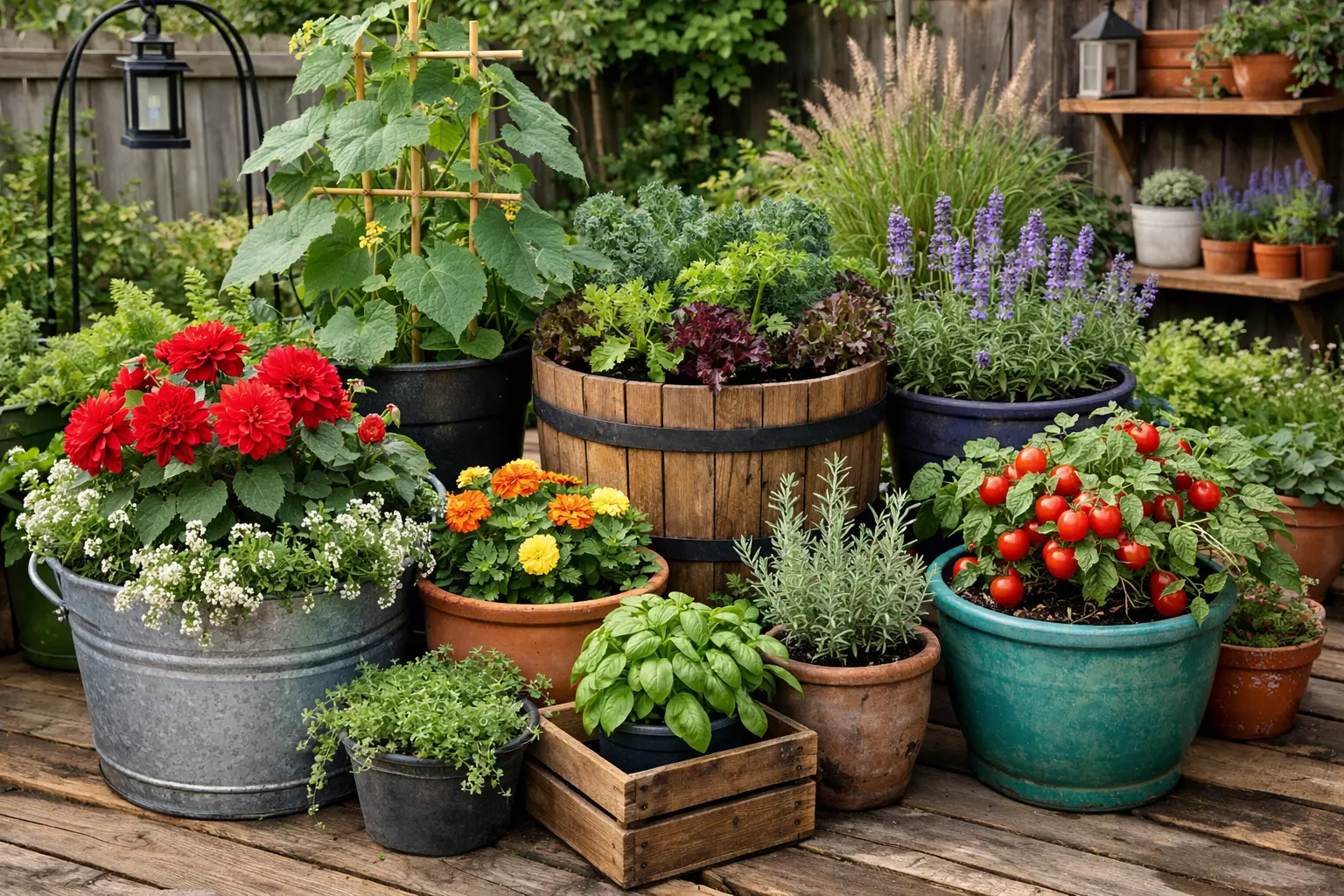
Starting a container vegetable garden is a practical way to grow fresh food in small spaces. This guide explains the steps, tools, and routines you need to plan, plant, and maintain a productive container vegetable garden.
Why choose a container vegetable garden
Container vegetable gardens work on balconies, patios, rooftops, and compact yards. They reduce soil-borne pests, allow precise soil control, and make plants easier to move or protect from weather.

Containers also help beginners focus on a few high-value crops and learn gardening basics with lower cost and effort than raised beds.
Planning your container vegetable garden
Good planning avoids wasted space and failed crops. Start by measuring available space and noting how many hours of direct sun the area receives each day.
Decide how many containers you want and pick plants that match light, height, and watering needs.
Choose containers for a container vegetable garden

Select containers with drainage holes and enough volume for the roots. Most vegetables need 5–20 gallons depending on crop size.
- Herbs and leaf greens: 1–3 gallon pots
- Tomatoes and peppers: 5–10 gallon containers
- Small dwarf tomatoes or compact varieties: 3–5 gallons
- Small root crops (carrots, radishes): 2–5 gallons, narrow and deep
Soil and fertilizer for a container vegetable garden
Use a high-quality potting mix labeled for containers; avoid garden soil that compacts and drains poorly. A good mix contains peat or coir, perlite or vermiculite, and compost.
Fertilize regularly because nutrients leach faster in containers. Use a slow-release granular fertilizer at planting and supplement with a balanced liquid feed every 2–3 weeks during the growing season.
Watering and drainage

Containers dry out faster than ground soil. Check moisture daily at first by sticking your finger 1–2 inches into the soil. Water deeply until water runs from drainage holes.
Consider these tips:
- Use saucers to protect surfaces, but empty excess water to avoid root rot.
- Self-watering containers reduce watering frequency and stabilize moisture.
- Mulching the surface with straw or shredded bark reduces evaporation.
Plant selection for a container vegetable garden
Choose compact or container-suited varieties. Look for terms like “bush,” “patio,” “compact,” or “dwarf.” These perform better in limited soil volumes.
Examples of good container vegetables:
- Lettuce, spinach, and other leafy greens
- Cherry tomatoes and determinate tomato varieties
- Peppers and hot peppers
- Radishes, baby carrots, and beets
- Bush beans and compact cucumbers
Placement and light for a container vegetable garden
Most vegetables need 6–8 hours of direct sun daily. Place sun-loving containers on the south or west side of a balcony or patio.
If your space gets only 3–5 hours of sun, focus on leafy greens and herbs that tolerate partial shade.
Maintenance and common problems in a container vegetable garden
Perform a weekly check for pests, water needs, and nutrient signs like yellowing leaves. Pinch or prune leggy growth to encourage bushier plants.
Common issues and fixes:
- Aphids or whiteflies: spray with water or insecticidal soap
- Blossom end rot on tomatoes: ensure consistent calcium levels and even watering
- Slow growth: add balanced liquid fertilizer and check root bound plants
Rotation and container reuse
Rotate crops seasonally to reduce disease buildup. Clean and disinfect containers between seasons with a mild bleach solution and rinse well.
Harvesting and extending the season
Harvest leafy greens young for best flavor. Pick tomatoes when fully colored and slightly soft. Regular harvesting encourages continuous production.
To extend the season, use lightweight frost covers or move containers to a sheltered, sunny spot during cold snaps.
Small real-world case study
Case: Sarah’s balcony container vegetable garden. She started with six containers: two 10-gallon pots for tomatoes, two 5-gallon for peppers, and two 3-gallon for mixed greens.
Her setup: south-facing balcony, morning sun, a good potting mix with compost, and weekly liquid feed. By mid-summer she harvested daily salad greens and ten pounds of cherry tomatoes. She solved spider mites by introducing predatory insects and reduced watering frequency by switching two pots to self-watering containers.
Result: consistent harvests, minimal space, and lower grocery bills—her experience shows small setups can yield ample produce when matched to site and routine.
Quick checklist to start a container vegetable garden
- Measure light and space and choose suitable crops
- Select containers with adequate volume and drainage
- Use quality potting mix and add compost
- Plan a watering and fertilizing schedule
- Monitor pests weekly and address issues early
Starting a container vegetable garden requires a bit of planning and routine care, but it is accessible to almost any space and skill level. Follow the steps above, learn from small experiments, and expand as you gain confidence.