
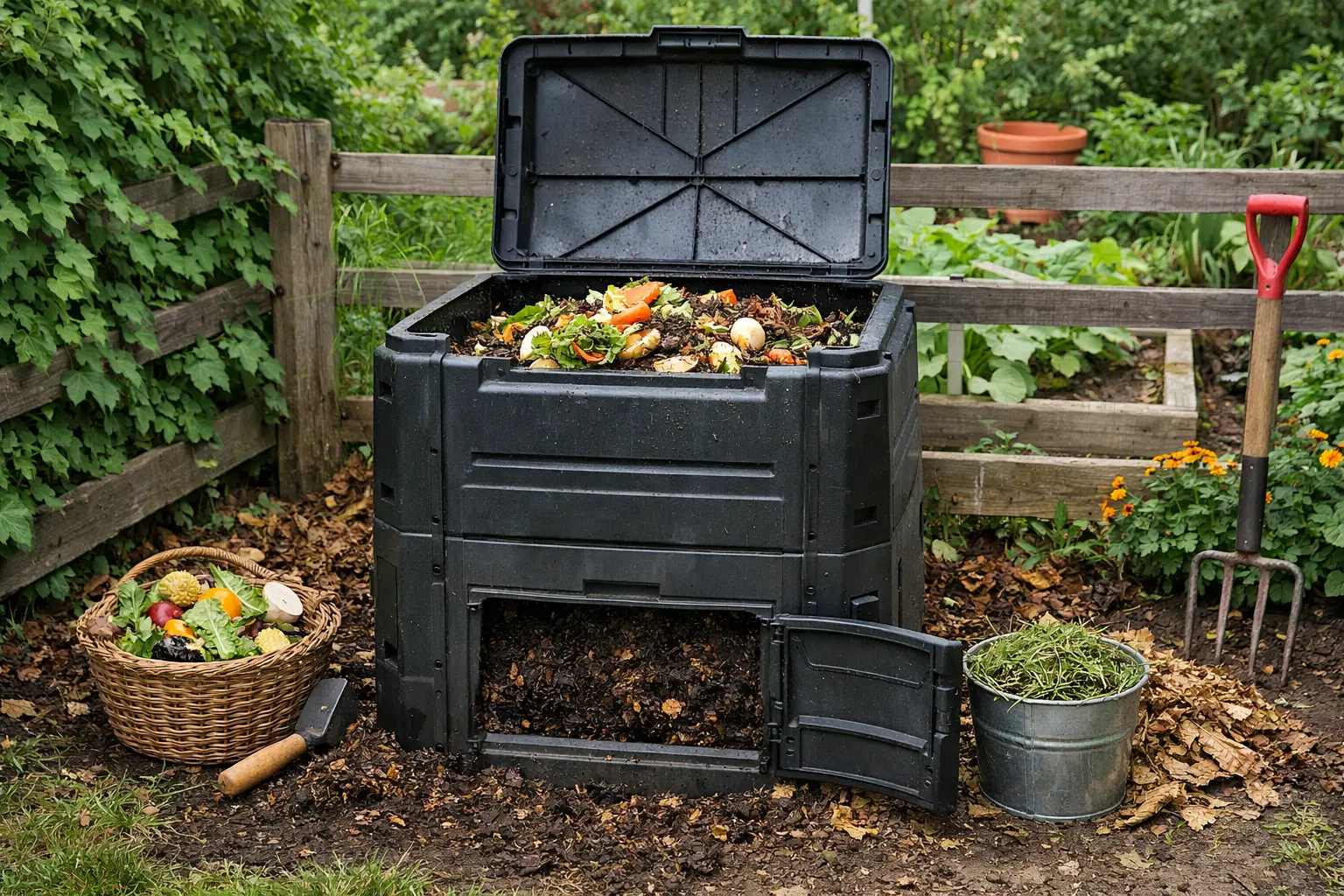
What Is Home Composting?
Home composting is the controlled breakdown of organic kitchen and yard waste into nutrient-rich material. It returns carbon and nitrogen to soil and reduces what you send to the landfill.
Compost improves soil structure, retains moisture, and supports plant health without chemical fertilizers. This guide focuses on simple, low-cost methods ideal for beginners.
Why Start Home Composting

Composting reduces household waste and produces free soil amendment for gardens and potted plants. It also lowers methane emissions from landfills by diverting food scraps.
Many people find composting saves money, reduces odor from trash, and gives a sense of circular living. The steps below make it achievable even in small spaces.
How to Start Home Composting
Choose a method that fits your space, time, and comfort level. Common options are a simple bin, a tumbler, or a small worm composter (vermicomposting).

Start with a receptacle placed on soil or a breathable surface to allow air and organisms to enter. If space is tight, use a compact indoor bokashi bucket or vermicompost setup under the sink.
Pick Your Bin
- Open pile or wire bin: Low cost and simple for yards.
- Plastic bin with lid: Cleaner and helps control moisture.
- Tumbler: Faster mixing but more expensive.
- Worm bin: Best for small apartments and steady kitchen scraps.
Gather Materials: Greens and Browns
Balance is key. Use ‘greens’ for nitrogen and ‘browns’ for carbon.
- Greens: vegetable peels, fruit scraps, coffee grounds, fresh grass clippings.
- Browns: dry leaves, shredded paper, cardboard, straw, small woody twigs.
A good starting mix is about 2–3 parts browns to 1 part greens by volume. Adjust if the pile smells or is too dry.
Layering and Maintenance for Home Composting

Layer materials rather than dumping everything on top. Start with coarse browns at the base to improve airflow.
Add a handful of garden soil or finished compost occasionally to introduce microbes. Turn or aerate the pile every 1–2 weeks to speed decomposition.
Moisture and Temperature
Compost should feel like a wrung-out sponge—moist but not dripping. Too dry slows decomposition; too wet causes odor and pests.
Temperatures in a well-managed pile will rise. Warm piles decompose faster, while cold piles still work but take longer. Insulate in winter with extra browns.
Troubleshooting Common Problems
Most issues are simple to fix with small adjustments. Use this quick checklist to keep your compost healthy.
- Bad smells: Add more browns and turn the pile to introduce air.
- Slow decomposition: Check moisture, add greens for nitrogen, and turn more often.
- Pests or fruit flies: Bury food scraps under browns or use a closed bin. Avoid meat, dairy, and oily foods.
- Too wet: Mix in dry browns and improve drainage or aerate more frequently.
Finishing and Using Compost
Compost is ready when it is dark, crumbly, and earthy-smelling. This can take 2–12 months depending on method and maintenance.
Use finished compost as a soil topper, mix into potting mixes, or work into garden beds to improve fertility and structure.
One household can divert up to 300–400 pounds of organic waste per year by composting common kitchen scraps.
Small Real-World Example
Case study: A family of three started a 60-liter tumbler and a small worm bin for indoor scraps. After six months they reduced their kitchen trash by roughly 60%.
The family used the finished compost in their vegetable containers, noticing better moisture retention and healthier tomato plants the next season.
Simple Weekly Routine for Home Composting
- Collect kitchen scraps in a small covered container.
- Every 2–3 days, add scraps to the outdoor bin and cover with browns.
- Check moisture weekly and turn the pile every 1–2 weeks.
- Harvest finished compost as needed and refresh the bin with fresh browns.
Tips and Examples
- Shred larger pieces like cardboard to speed breakdown.
- Keep a small stash of dried leaves or shredded paper to balance unexpected wet loads.
- Use coffee grounds directly in the bin; they are a good nitrogen source.
Final Thoughts on Home Composting
Home composting is low cost and scalable to yards, balconies, and apartments. Start small, learn by doing, and adjust the mix and routine to your schedule.
With basic care—balancing greens and browns, maintaining moisture, and occasional turning—you can produce valuable compost and cut household waste significantly.