
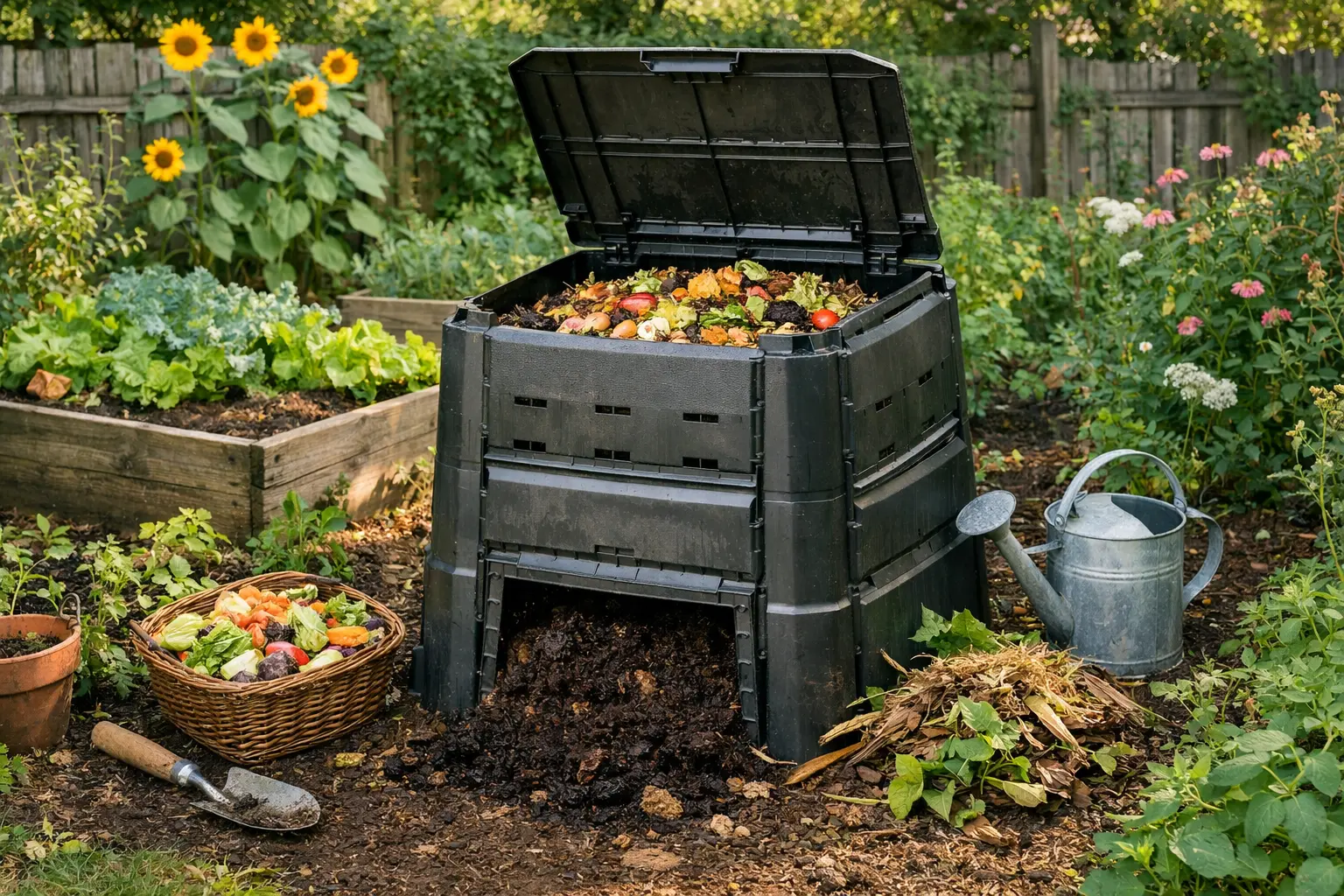
Why start home composting
Home composting turns kitchen scraps and yard waste into valuable soil amendment. It reduces landfill waste and improves garden health with minimal cost.
This guide explains simple methods, common problems, and practical tips so you can begin composting today.
What is home composting?

Home composting is the controlled decomposition of organic material by microorganisms. The result is dark, crumbly compost that adds nutrients and structure to soil.
Composting at home can be done in bins, piles, tumblers, or vermicomposting with worms, depending on space and goals.
Types of home composting
- Cold composting: Low maintenance, slower breakdown over months to a year.
- Hot composting: Requires layering, turning, and moisture control to reach high temperatures and finish in weeks.
- Tumbler composting: Enclosed container that you rotate regularly to aerate and speed up decomposition.
- Vermicomposting: Uses red worms to process food scraps indoors or in small outdoor bins.
How to start home composting
Choose a method that fits your space and effort level. A simple bin in the backyard or a countertop worm bin can both work well.

Follow these basic steps to set up a compost system:
- Select a location: well-drained, partial shade, accessible for turning or adding scraps.
- Pick a container: wire bin, wooden pallet enclosure, plastic tumbler, or worm box.
- Gather materials: a balance of brown (carbon) and green (nitrogen) items.
- Maintain: keep mix moist like a wrung-out sponge and turn periodically for aeration.
What to compost
- Greens (nitrogen): fruit and vegetable scraps, coffee grounds, fresh grass clippings.
- Browns (carbon): dry leaves, straw, shredded paper, cardboard.
- Do not compost: meat, dairy, oily foods, diseased plants, pet waste from carnivores.
Step-by-step hot composting for beginners
Hot composting produces finished compost faster and kills many weed seeds. It needs regular attention but is straightforward to start.
- Layer materials: start with coarse browns for drainage, then alternate greens and browns in 6-8 inch layers.
- Moisture: add water as you build layers so contents are damp but not soggy.
- Turn: after the pile reaches about 3 feet high, turn every 1–2 weeks to add oxygen and mix materials.
- Monitor temperature: ideal range is 130–160°F (54–71°C) for rapid decomposition; use a compost thermometer if available.
- Finish: when material is dark and crumbly with an earthy smell, cure it for a few weeks before use.
Common problems and solutions
Composting is forgiving, but a few problems are common. Simple adjustments usually fix them quickly.
- Bad odors: add more browns and turn the pile to increase air flow.
- Pests: avoid adding meat or oily foods and use enclosed bins or bury scraps under a browns layer.
- Slow decomposition: add greens for nitrogen, increase moisture, or chop materials into smaller pieces.
- Too wet: add dry browns and turn to dry and aerate the pile.
Tips to speed home composting
- Chop or shred materials to increase surface area for microbes.
- Maintain a carbon to nitrogen ratio around 25–30:1 for efficient breakdown.
- Use a compost activator like finished compost or garden soil to introduce microbes.
- Turn regularly to supply oxygen and even out temperatures.
Using finished compost

Finished compost can be used as a top-dressing, mixed into potting soil, or worked into garden beds. It improves soil structure, water retention, and nutrient availability.
Apply a 1–3 inch layer around plants or mix 10–30% compost into garden soil for planting.
Composting one ton of food scraps can avoid roughly 0.5–1 ton of CO2 equivalent emissions by diverting waste from landfills and reducing methane production.
Small real-world case study
A three-person household in Austin switched to a backyard bin and vermicompost pail for kitchen scraps. Over one year they cut their trash volume by half and produced about 60 liters of finished compost.
The compost improved their vegetable bed yields by 20% and reduced fertilizer purchases. Small, consistent changes made the program sustainable for a busy family.
Final checklist to begin home composting
- Choose a composting method (cold, hot, tumbler, or worm bin).
- Gather supplies: bin, browns, basic tools, optional thermometer.
- Start with a balanced pile, keep it moist, and turn as needed.
- Watch for pests and odors and adjust greens/browns accordingly.
Home composting is a practical way to reduce waste and create a free, effective soil amendment. Start small, learn by doing, and scale up as you gain confidence.