
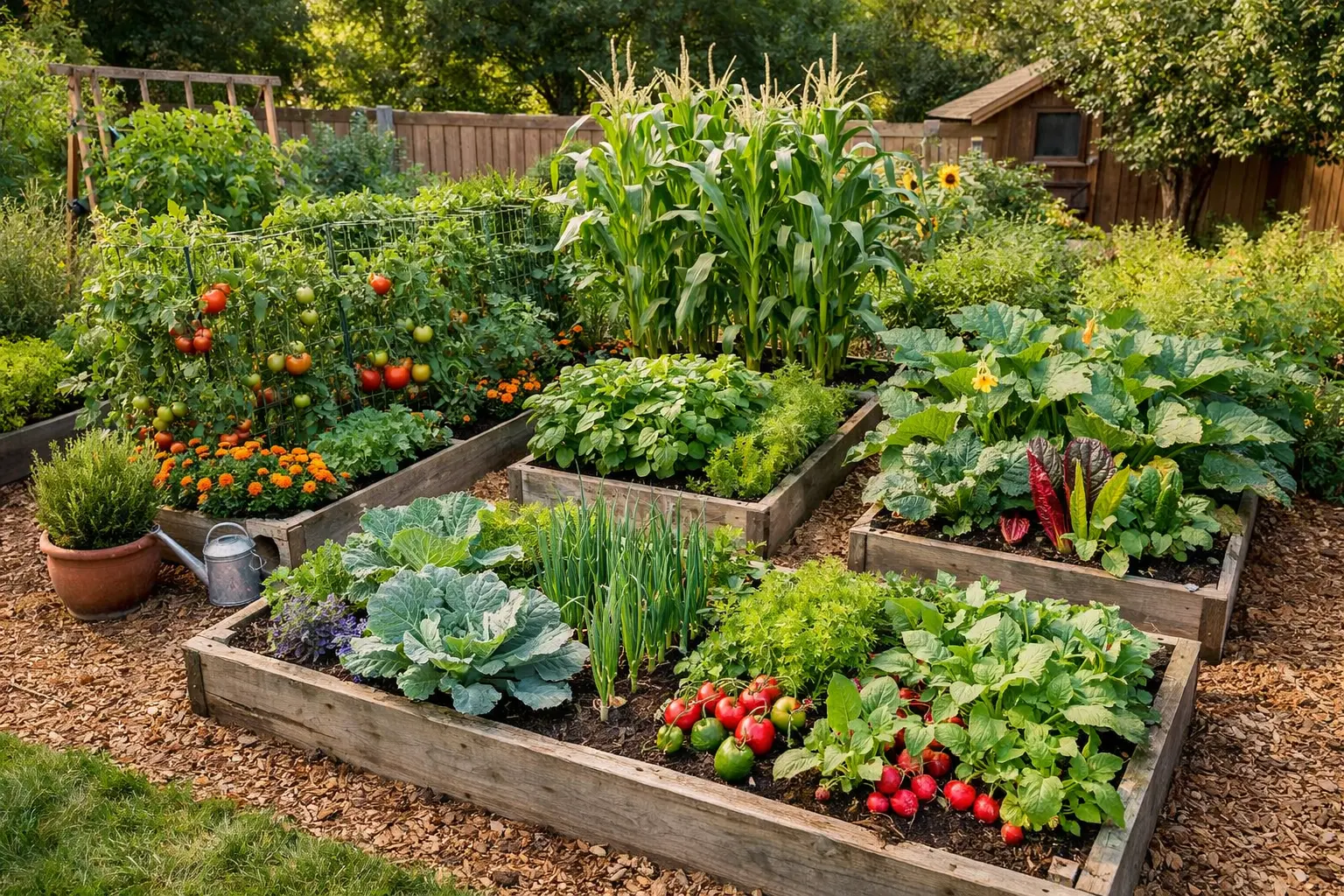
Starting a small vegetable garden is practical and rewarding. This guide gives clear, step-by-step instructions you can use whether you have a backyard patch, raised beds, or balcony containers.
Plan Your Small Vegetable Garden
Good planning saves time and money. Decide how much space you have, your available sunlight, and how much time you can commit each week.

Sketch a simple layout showing beds or containers and list the vegetables you want to grow. Choose a few easy crops first to build confidence.
Set Goals for Your Small Vegetable Garden
Be specific about what success looks like. Do you want fresh salad greens weekly or a few tomato plants for summer salsa?
Realistic goals help you choose appropriate crops and spacing.
Choose a Site for a Small Vegetable Garden

Most vegetables need 6–8 hours of direct sunlight daily. Observe the site for a few days to confirm light patterns.
Consider proximity to water, ease of access, and wind protection. Raised beds or containers can help when ground soil is poor.
Sunlight and Microclimates
Use sunnier south-facing spots for fruiting crops like tomatoes and peppers. Cooler, shadier corners work for lettuce and spinach.

Walls and fences can create warm microclimates useful for heat-loving vegetables.
Prepare Soil for a Small Vegetable Garden
Soil quality is the foundation of a productive garden. Test texture and drainage by digging a small hole and checking moisture and crumb structure.
Amend soil with compost and work it into the top 8–12 inches. For heavy clay, add coarse sand and organic matter; for sandy soil, add compost to improve water retention.
Soil pH and Fertility
Most vegetables prefer a pH of 6.0–7.0. Use a simple soil test kit to check pH and nutrient levels.
Add lime to raise pH or sulfur to lower it, following package instructions for rates based on test results.
Choose Plants for a Small Vegetable Garden
Select crops that match your climate, space, and diet. Prioritize fast-growing, high-yield plants for limited space.
Good beginner choices include lettuce, radishes, beans, cherry tomatoes, herbs, and leafy greens.
Succession Planting and Companion Tips
Use succession planting to maximize harvests: sow quick crops like radishes between slower crops such as cabbages.
Companion planting can reduce pests and improve yields. For example, basil near tomatoes can help flavor and deter some pests.
Layout and Planting for a Small Vegetable Garden
Plan rows, raised beds, or containers so each plant gets adequate spacing. Overcrowding causes disease and reduces yields.
Consider vertical supports for vining crops to save ground area and improve air circulation.
- Raised beds: good drainage and easy maintenance.
- Containers: excellent for balconies and patios.
- Vertical trellises: ideal for peas, beans, cucumbers.
Care and Maintenance of a Small Vegetable Garden
Consistent watering, regular weeding, and periodic feeding are the main tasks. Water deeply at the base to encourage strong roots.
Mulch helps retain moisture, suppress weeds, and regulate soil temperature. Use straw, shredded leaves, or compost mulch.
Watering and Fertilizing
Most vegetables need about 1 inch of water per week, more during hot spells. Early morning watering reduces disease risk.
Fertilize with a balanced organic fertilizer or compost tea according to plant needs and growth stages.
Pest and Disease Management in a Small Vegetable Garden
Monitor plants weekly to catch issues early. Hand-pick larger pests and use row covers to protect seedlings from insects and birds.
Encourage beneficial insects by planting flowers like marigolds or calendula near your beds.
- Rotate crops yearly to reduce soil-borne diseases.
- Remove infected plant material promptly and do not compost diseased foliage.
Planting diverse crops in a small area can increase resilience and reduce pest outbreaks. Diversity mimics natural ecosystems and supports beneficial insects.
Harvesting and Storing from a Small Vegetable Garden
Harvest frequently to encourage continued production. Pick vegetables at peak ripeness for best flavor and nutrition.
Store produce correctly: leafy greens keep best wrapped in a damp towel in the fridge, while tomatoes are often better stored at room temperature.
Simple Case Study: A Balcony Small Vegetable Garden
Maria had a 6-foot balcony and wanted fresh salad greens. She used three 12-inch containers and one tomato pot, placed them in full sun, and filled them with a potting mix amended with compost.
Within 10 weeks she harvested regular salads from mixed lettuce, harvested cherry tomatoes, and grew basil for pesto. Lessons learned included the need for daily watering in summer and adding a trellis for the tomato plant.
Final Tips for a Successful Small Vegetable Garden
Start small and expand as you gain experience. Keep a simple garden journal to record planting dates, varieties, and problems encountered.
Be patient. Even small successes build skills and confidence, and a compact garden can supply fresh produce and satisfaction year after year.
Try one new vegetable each season and adjust based on what grows best in your space. With planning and simple maintenance, a small vegetable garden can be productive and enjoyable.