
Begin Composting at Home Without Overwhelm
Home composting is a practical way to reduce household waste and improve garden soil. You don’t need special equipment or experience to begin.
Why Home Composting Matters
Composting diverts organic waste from landfills and lowers methane emissions. It also returns nutrients to soil, improving plant health and water retention.

Whether you have a balcony, a small yard, or several acres, home composting can be adapted to your space and goals.
How to Start Home Composting
Choose a Composting Method
Select a method that fits your space and schedule. Common approaches work well for beginners and are inexpensive.
- Cold pile: Simple, low maintenance, best for yards with space.
- Tumbler bin: Faster decomposition and easier turning, ideal for small yards.
- Vermicomposting: Uses worms and fits indoors or balconies; great for kitchen scraps.
Pick a Location and Container
Place your compost container on bare soil or a well-drained surface. This encourages beneficial organisms to enter the pile.

For small spaces, use closed bins or worm trays to control odor and pests. For large gardens, an open pile or simple wooden bin works fine.
Build and Maintain Your Compost
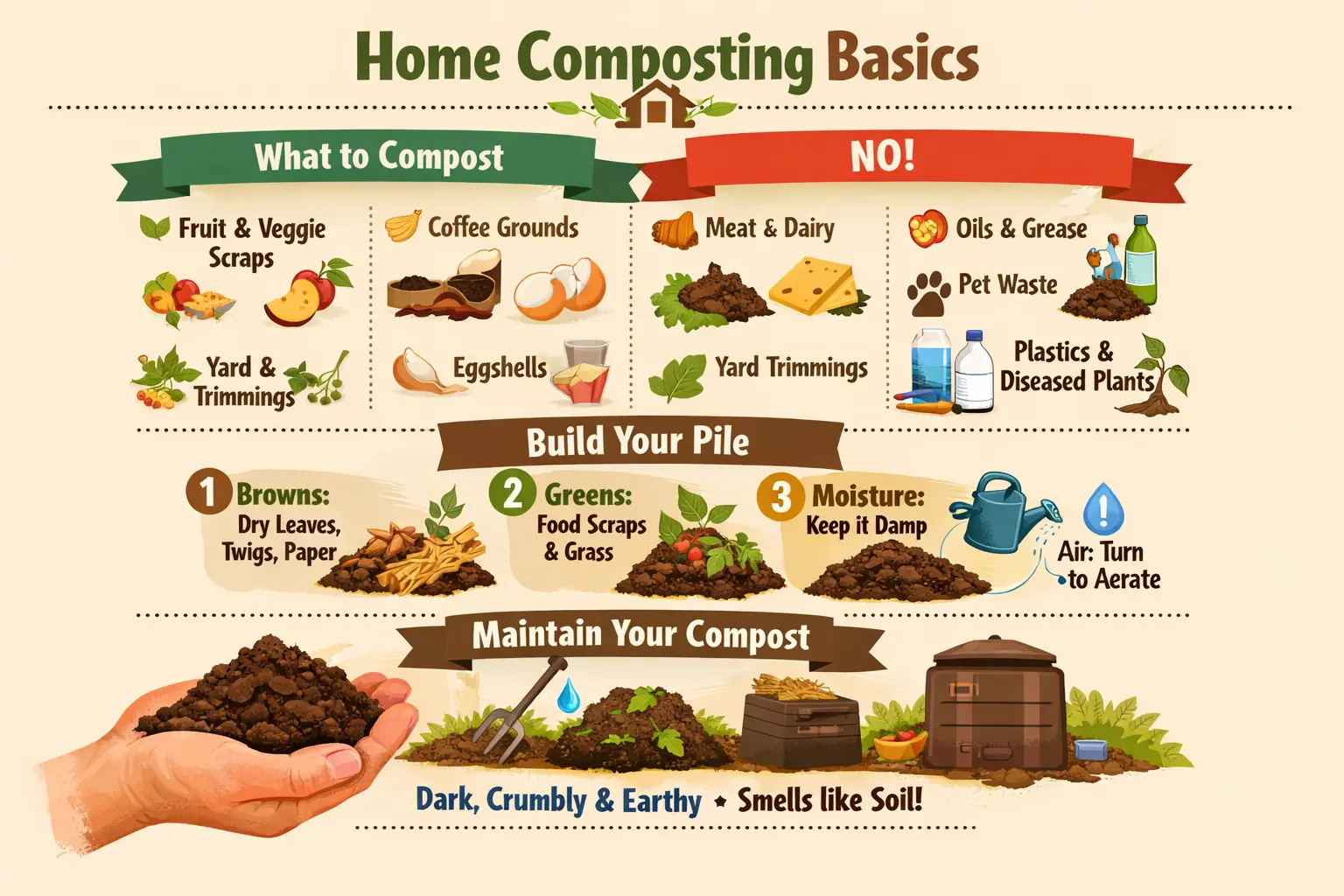
Balance carbon rich materials (browns) and nitrogen rich materials (greens). Aim for roughly a 3:1 ratio of browns to greens by volume.
- Browns: Dry leaves, shredded paper, cardboard, straw.
- Greens: Vegetable scraps, coffee grounds, grass clippings.
Keep the pile moist like a wrung-out sponge and turn it every 1–2 weeks for faster decomposition. If you notice bad smells, add more browns and increase aeration.
What to Compost and What to Avoid

Knowing what to include keeps the process healthy and efficient. Many common household items make excellent compost feedstock.
- Good to compost: Fruit and vegetable scraps, coffee grounds, eggshells, yard trimmings, paper towels.
- Avoid: Meat, dairy, oils, diseased plants, pet waste, and invasive weeds with seeds.
Troubleshooting Common Home Composting Problems
Pile Smells Bad
Bad odors usually mean too much moisture or too many greens. Add dry browns and turn the pile to introduce air.
Pile Is Not Heating Up
Low activity indicates insufficient size, poor carbon-nitrogen balance, or lack of moisture. Increase pile size, add greens, and water gently.
Pests Are Visiting
Keep food scraps buried under browns and use closed bins if rodents are a problem. Avoid composting meat or oily foods.
Harvesting and Using Finished Compost
Compost is ready when it is dark, crumbly, and smells earthy. This can take anywhere from two months to a year depending on the method.
Use finished compost as a soil amendment, mix into potting mixes, top-dress lawns, or make compost tea for liquid feeding.
Composting one pound of kitchen waste prevents roughly half a pound of CO2 equivalent from reaching the atmosphere compared with landfill disposal. Small household changes add up.
Small Real-World Case Study: A Family Turns Scraps into Garden Gold
A suburban family of four started a 3-bin system behind their garage. They collected kitchen scraps in a countertop bucket and added shredded newspaper from their recycling pile.
Within six months they produced rich compost used in vegetable beds. Their tomatoes produced larger fruit and required less watering in the following season.
Key takeaways: regular turning, balance of greens and browns, and covering fresh scraps helped reduce smells and speed up decomposition.
Quick Checklist to Start Home Composting
- Choose a bin or method suited to your space.
- Gather browns and greens; aim for ~3:1 browns to greens.
- Keep the pile moist and turn regularly for airflow.
- Monitor for pests and odors; adjust materials accordingly.
- Harvest when the compost is dark and crumbly.
Frequently Asked Questions About Home Composting
How much kitchen waste can I compost?
Most households can compost several pounds of kitchen scraps per week. Worm bins are particularly efficient for small indoor volumes.
Can I compost in winter?
Yes. Composting slows in cold weather but continues. Insulate outdoor bins or move indoor systems to a warmer spot.
Final Practical Tips for Successful Home Composting
Start small and be consistent. Composting is forgiving; minor mistakes can be corrected by adjusting moisture, aeration, or the materials added.
Track progress by checking smell, temperature, and texture of the pile. With routine care, home composting becomes an easy habit that benefits your garden and the planet.