
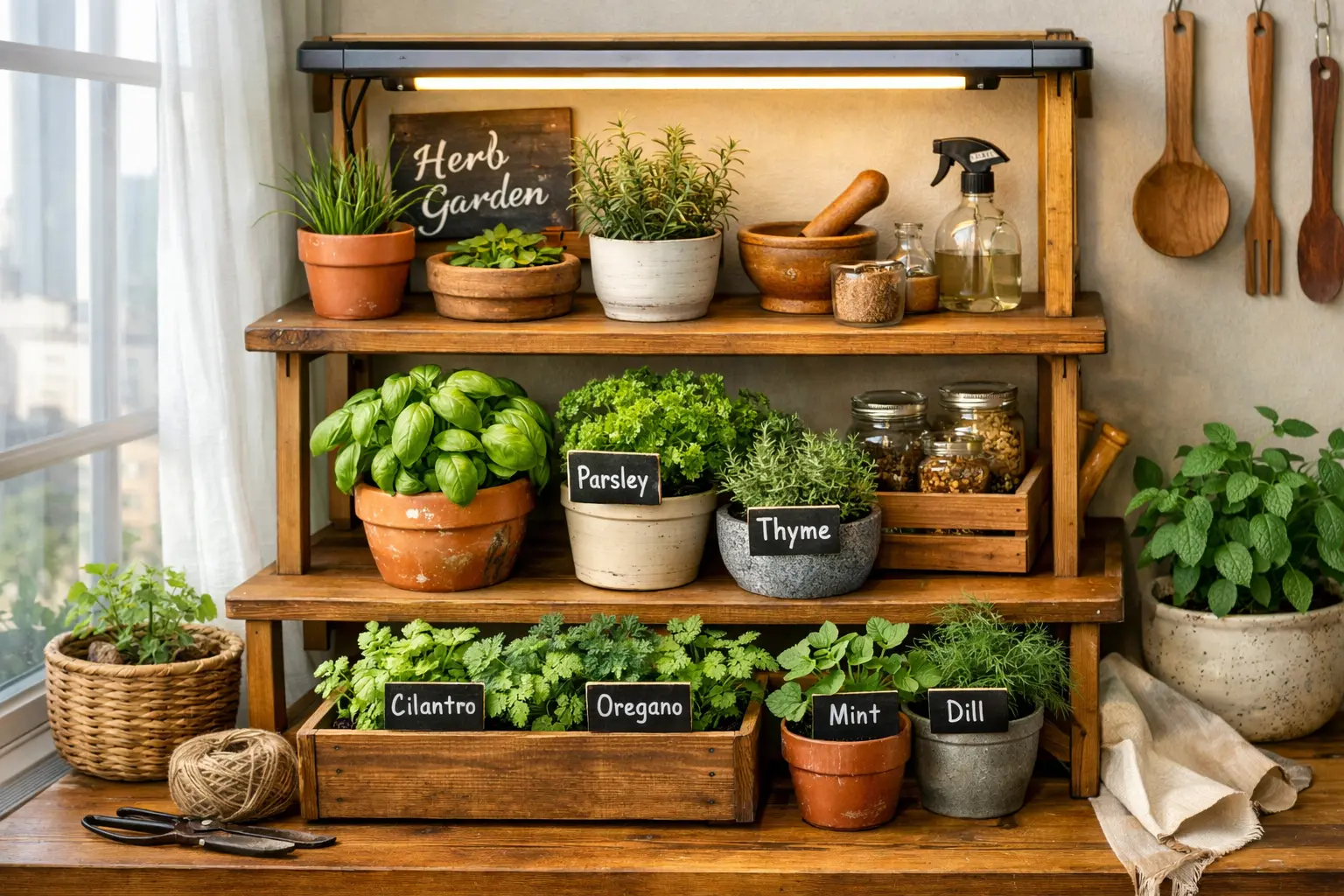
Why Grow an Indoor Herb Garden
Growing an indoor herb garden brings fresh flavor to your kitchen and reduces grocery trips. Herbs also improve indoor air quality and are forgiving for new gardeners.
Choosing Plants for an Indoor Herb Garden
Pick herbs that suit indoor conditions and your cooking habits. Start with three to five easy-care herbs to learn basic care without getting overwhelmed.
Best Herbs for Beginners: indoor herb garden
- Basil — loves bright light and warm temperatures.
- Parsley — tolerates moderate light and regular watering.
- Mint — grows quickly and tolerates lower light, but keep it contained.
- Chives — easy to grow in a small pot and great for salads.
- Thyme and Oregano — drought-tolerant and low-maintenance.
Setting Up Your Indoor Herb Garden

Good setup makes the difference between struggling plants and steady growth. Focus on light, containers, soil, and drainage for a successful indoor herb garden.
Light requirements for an indoor herb garden
Most herbs need 6–8 hours of bright light. Place plants on a south- or west-facing windowsill when possible.
If natural light is limited, use a full-spectrum LED grow light placed 6–12 inches above the plants for 10–14 hours a day.
Containers and soil for an indoor herb garden

Use pots with drainage holes to prevent root rot. Select containers that are at least 4–6 inches deep for most herbs.
Choose a light, well-draining potting mix with added perlite or coarse sand. Avoid garden soil, which compacts indoors.
Planting and Watering Practices
Plant herbs at the same depth as their nursery pots and leave 1–2 inches between stems to allow airflow. Water thoroughly after planting and let excess drain away.

Water on a schedule adjusted to your conditions: typically when the top 1 inch of soil feels dry. Overwatering is the most common mistake indoors.
Feeding and fertilizing an indoor herb garden
Use a balanced, water-soluble fertilizer at half strength every 4–6 weeks during active growth. Reduce feeding in winter when growth slows.
Organic options like compost tea or fish emulsion work well for edible herbs and add nutrients without buildup.
Care and Maintenance Tips for Your Indoor Herb Garden
Regular pruning keeps herbs productive and prevents legginess. Harvest leaves from the top to encourage bushier growth.
Rotate pots weekly so all sides receive light and monitor for pests like aphids or spider mites. Wipe leaves or spray with insecticidal soap if needed.
Practical daily and weekly routines
- Daily: Check soil moisture and light levels.
- Weekly: Prune dead leaves, rotate pots, and inspect for pests.
- Monthly: Feed with diluted fertilizer and refresh the top inch of soil if compacted.
Troubleshooting Common Problems in an Indoor Herb Garden
Yellow leaves often indicate overwatering or poor drainage. Move to a brighter spot and reduce watering frequency.
Leggy growth means insufficient light. Raise the plant to a brighter window or add supplemental grow lights and pinch back long stems.
Harvesting and Using Herbs from an Indoor Herb Garden
Harvest in the morning after dew evaporates for best flavor. Take no more than one-third of the plant at a time to avoid stress.
Use fresh leaves in salads, sauces, and teas. To preserve excess, dry gently or freeze chopped herbs in olive oil ice cube trays.
Small Real-World Example: kitchen window basil case study
Maria, a novice cook, started three basil plants on her south-facing kitchen window. She used 6-inch pots with well-draining potting mix and placed a timed LED light two feet away for cloudy days.
By following a simple routine—watering when the top inch was dry, pinching tops weekly, and feeding once a month—she harvested fresh basil weekly for six months and replaced one pot after it flowered.
Some herbs like basil and cilantro bolt (flower and go to seed) quickly under heat. Pinching off flower buds encourages more leaf growth and extends the harvest period.
Simple Supplies Checklist for a First Indoor Herb Garden
- Pots with drainage holes (4–6 inch minimum)
- Quality potting mix with perlite
- Full-spectrum LED grow light (optional but useful)
- Small hand pruners or scissors
- Liquid fertilizer or organic feed
Final Tips for a Successful Indoor Herb Garden
Start small and learn one plant at a time. Consistency with light and watering matters more than frequent attention.
Keep a notebook of planting dates, watering frequency, and harvests to refine care over the first year. With a simple setup, fresh herbs can be a reliable, year-round benefit.