
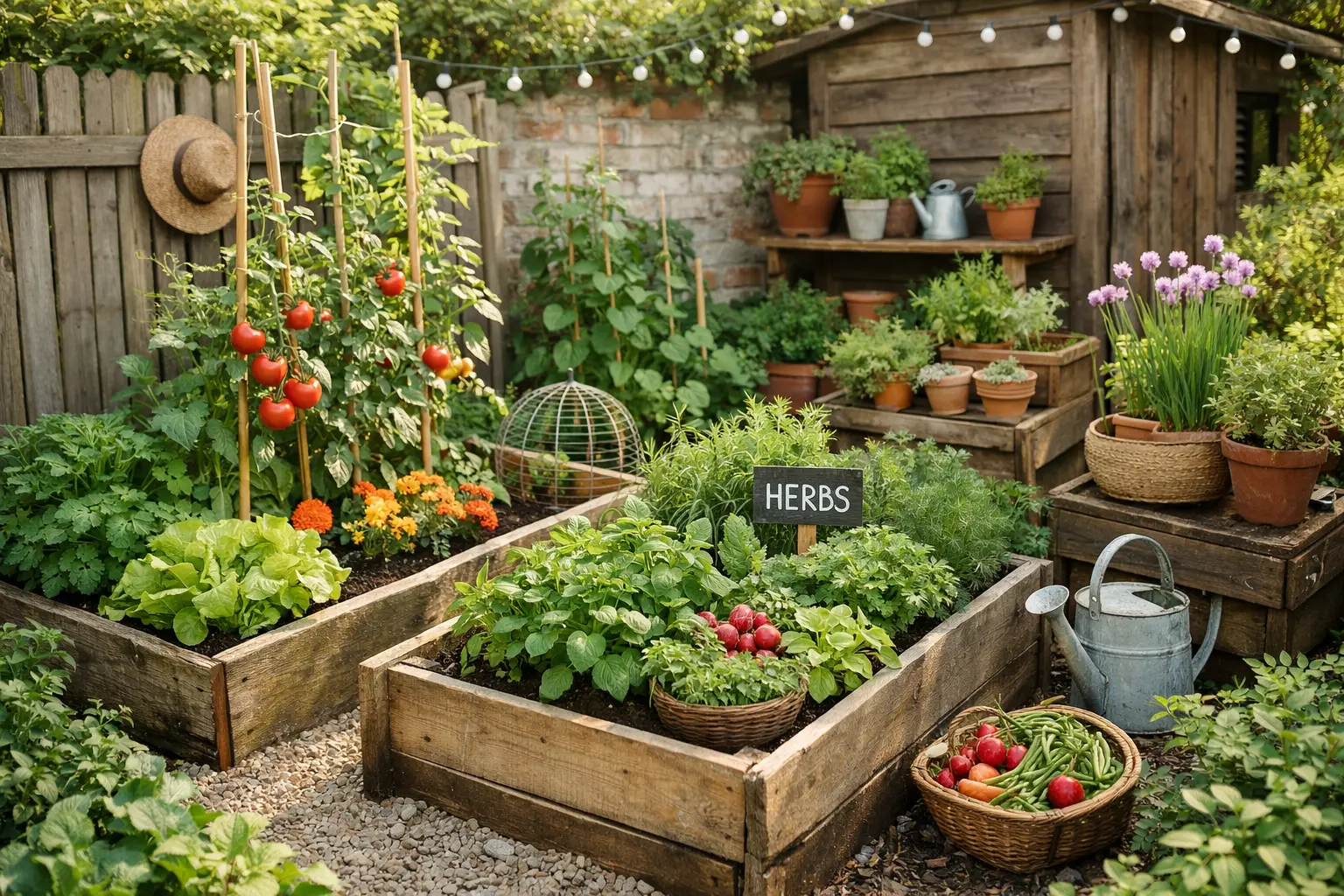
Why a Small Kitchen Garden Works
Small kitchen gardens fit balconies, windowsills, and small backyards. They deliver fresh herbs and vegetables while requiring limited time and space.
This guide explains practical steps to plan, plant, and maintain a productive small kitchen garden. Follow these steps to get useful produce quickly.
How to Start a Small Kitchen Garden: Quick Planning

Start with a simple plan that answers where you will grow, what to plant, and how much time you can commit. A clear plan avoids wasted effort and expense.
Consider light, access to water, and the types of produce you use most in the kitchen. These factors determine layout and container choices.
Choose the Best Location for Your Small Kitchen Garden
Most vegetables and herbs need 4–6 hours of sunlight daily. Observe your space at different times of day to identify sunny and shaded spots.

If you have low light, favor leafy greens and herbs like mint. For sunny spots, choose tomatoes, peppers, and basil.
Decide Between Containers and Ground Beds
Containers are ideal for balconies, patios, and renters. They offer mobility and control over soil quality. Ground beds are best when you have healthy garden soil and more space.
Use pots with drainage holes and choose sizes appropriate for each plant’s root system. For example, tomatoes need deeper pots than lettuce.
Soil, Fertilizer, and Watering for a Small Kitchen Garden

Good soil is the foundation of a productive kitchen garden. Use a quality potting mix for containers and amend garden soil with compost for beds.
Fertilize lightly and regularly using balanced organic fertilizer or compost tea. Avoid overfeeding, which can reduce flavor and cause weak growth.
Watering Tips
Consistent moisture is key. Water containers more often than ground beds because they dry faster. Water early in the day to reduce evaporation and disease risk.
Use a simple drip setup, soaker hose, or watering can to deliver even moisture. Check soil by touch: it should be moist but not waterlogged.
Best Plants for a Small Kitchen Garden
Begin with fast-growing, low-maintenance plants that give frequent harvests. These maximize satisfaction and minimize risk.
- Basil, parsley, and chives — quick harvests and small space needs.
- Lettuce and spinach — fast growth and tolerate partial shade.
- Cherry tomatoes and peppers — productive in larger pots with support.
- Radishes and green onions — great for successive sowing and quick returns.
Planting and Care Schedule for Your Small Kitchen Garden
Create a simple weekly schedule to check watering, pests, and growth. A short routine prevents problems from becoming setbacks.
Key tasks include watering, harvesting, pruning, and checking for pests. Regular harvesting encourages more production in many plants.
Seasonal Planning
Plan for at least two growing cycles a year if climate allows: cool-season and warm-season crops. Rotate container crops to avoid soil fatigue.
Sow seeds for quick crops every 2–4 weeks to maintain a steady supply of greens and herbs.
Common Problems and Easy Solutions
Pests, nutrient deficiencies, and uneven watering are the most common issues in small gardens. Address them early with simple fixes.
- Slugs and snails: hand-pick at night or use shallow beer traps.
- Aphids: spray with water or use insecticidal soap.
- Yellowing leaves: check soil moisture and add compost or balanced fertilizer.
Did You Know?
Small Case Study: Maya’s Balcony Kitchen Garden
Maya transformed a 6-foot balcony into a productive kitchen garden in three months. She used five containers: two deep pots for tomatoes, two medium pots for herbs, and one long planter for lettuce and radishes.
Maya followed a simple schedule: water every other day, harvest herbs thrice weekly, and rotate quick crops in the planter. Her first tomato harvest started eight weeks after planting, and she replaced lettuces on a rolling schedule.
Her results: fresh salad greens most weeks, herbs for cooking, and occasional cherry tomatoes without adding more than 20 minutes of work per week.
Practical Checklist to Start Your Small Kitchen Garden
- Pick a sunny or partially sunny location and note daily light hours.
- Choose containers with good drainage and appropriate size.
- Buy quality potting mix and add compost or slow-release organic fertilizer.
- Select 4–6 easy plants to start, focusing on herbs and quick greens.
- Establish a weekly care routine: water, harvest, inspect for pests.
Final Tips for Growing a Successful Small Kitchen Garden
Start small and expand as you gain confidence. Success often comes from consistent care, simple planning, and choosing plants that match your conditions.
Keep a notebook or smartphone photo log to track what works and what needs adjustment. Small improvements over time lead to steady, enjoyable yields.