

Overview: Trump’s $2,000 tariff checks and what they mean
Proposals for $2,000 tariff checks refer to one-time payments to Americans funded by revenue collected from tariffs. To move from a proposal to money in people’s bank accounts requires a mix of congressional action, legal authority, and administrative work.
This guide explains the practical steps that must happen for those checks to be authorized and delivered.
Step 1: A bill must be introduced and passed in the House
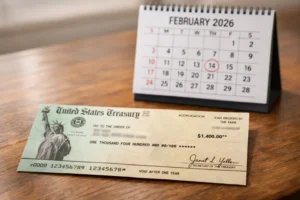
Any law that spends federal money normally starts with legislation. Because tariff revenue is federal money, Congress must pass a bill that authorizes the payments and specifies the funding source and eligibility rules.
The Constitution requires revenue bills to originate in the House of Representatives. Practically, the House will draft language that specifies the amount per eligible person, definitions of eligibility, and the legal authority for the Treasury to make payments.
Key House actions
- Draft and vote on the bill that authorizes $2,000 payments and designates tariff revenue as the funding source.
- Include appropriation or transfer language so the Treasury can legally spend the money.
- Set eligibility rules (e.g., adults, dependents, income caps, or Social Security recipients).
Step 2: The Senate must approve the same bill
Once the House passes its bill, the Senate must consider and pass it too. If the Senate amends the House bill, the two chambers must reconcile differences before sending a single version to the president.

Senate procedures matter. If opponents use a filibuster, the bill may need 60 votes to proceed. Alternatively, lawmakers could attempt to use budget reconciliation, but reconciliation has strict rules and typically applies to budgetary changes already included in a budget resolution.
Practical Senate hurdles
- Achieve majority support or 60 votes to overcome a filibuster.
- Ensure the final text meets reconciliation rules if that route is chosen.
- Resolve any House-Senate differences in a conference or through amended votes.
Step 3: The president must sign the bill into law
After both chambers pass the same bill, the president can sign it. Without presidential signature the bill becomes law only if Congress overrides a veto with a two-thirds vote in both chambers.
Once signed, the statute will direct how tariff revenue is allocated and give an agency—usually the Treasury—the authority to issue payments.
Step 4: Administrative setup and distribution
After enactment, federal agencies need to implement the law. The Treasury Department commonly handles direct federal payments, often working with the IRS to locate recipients and deliver money via direct deposit or paper checks.
Key administrative tasks include defining evidence of eligibility, creating disbursement rules, and coordinating data sharing with the IRS, Social Security Administration, and other agencies.
Operational steps for issuing payments
- Treasury issues guidance and rules describing who gets a check and how much.
- IRS or SSA matches records to identify recipients and bank account information.
- Payments are processed by electronic transfer or mailed checks. Timing depends on system readiness and verification needs.
Legal and budgetary checks
Lawyers will review whether the law complies with appropriations and tariff statutes. The Congressional Budget Office (CBO) will score the bill to estimate budget effects and ensure it fits budget rules.
Courts could be asked to review challenges—if, for example, opponents claim the law improperly diverts tariff receipts or exceeds statutory authority. Clear drafting reduces legal risk.
Realistic timeline and timing constraints
The timeline from bill introduction to payments can vary widely. If Congress acts quickly and administrative systems are ready, distribution could take a few weeks to a few months. If legal, technical, or political barriers emerge, it could take much longer.
Example timeline
- Week 1–4: House drafts and passes bill.
- Week 3–6: Senate debates, amends, and passes bill.
- Week 6–8: President signs; Treasury and IRS begin implementation.
- Month 2–4 post-signing: Payments issued, first by direct deposit and then by mail.
Federal payments have commonly used IRS records for delivery. The 2020 Economic Impact Payments used IRS direct deposit records to reach millions within weeks of enactment.
Case study: Using past stimulus checks as a model
During 2020–2021, Congress authorized stimulus payments and the IRS used existing taxpayer information to speed delivery. That experience shows how quickly payments can move when the law is clear and agencies have modern data systems.
For example, a household that filed taxes and had direct deposit received funds first, while those without up-to-date information waited longer for mailed checks. The same practical lesson would apply to any tariff-funded $2,000 checks.
Practical checklist: What must happen before Americans see $2,000 tariff checks
- House introduces and passes a bill authorizing payments and designating tariff revenue.
- Senate passes the same bill (or reconciliation produces a final bill).
- President signs the bill or Congress overrides a veto.
- Treasury and IRS implement rules, verify recipients, and set payment mechanics.
- Payments are issued by direct deposit or mailed checks; oversight and reporting follow.
Bottom line
Trump’s $2,000 tariff checks cannot be sent without clear legal authority and administrative planning. Congress must pass appropriate legislation, the president must sign it, and federal agencies must implement distribution. The speed of delivery depends on political agreement, legal clarity, and administrative readiness.
Following these steps is essential to move from a proposal to payments people actually receive.