
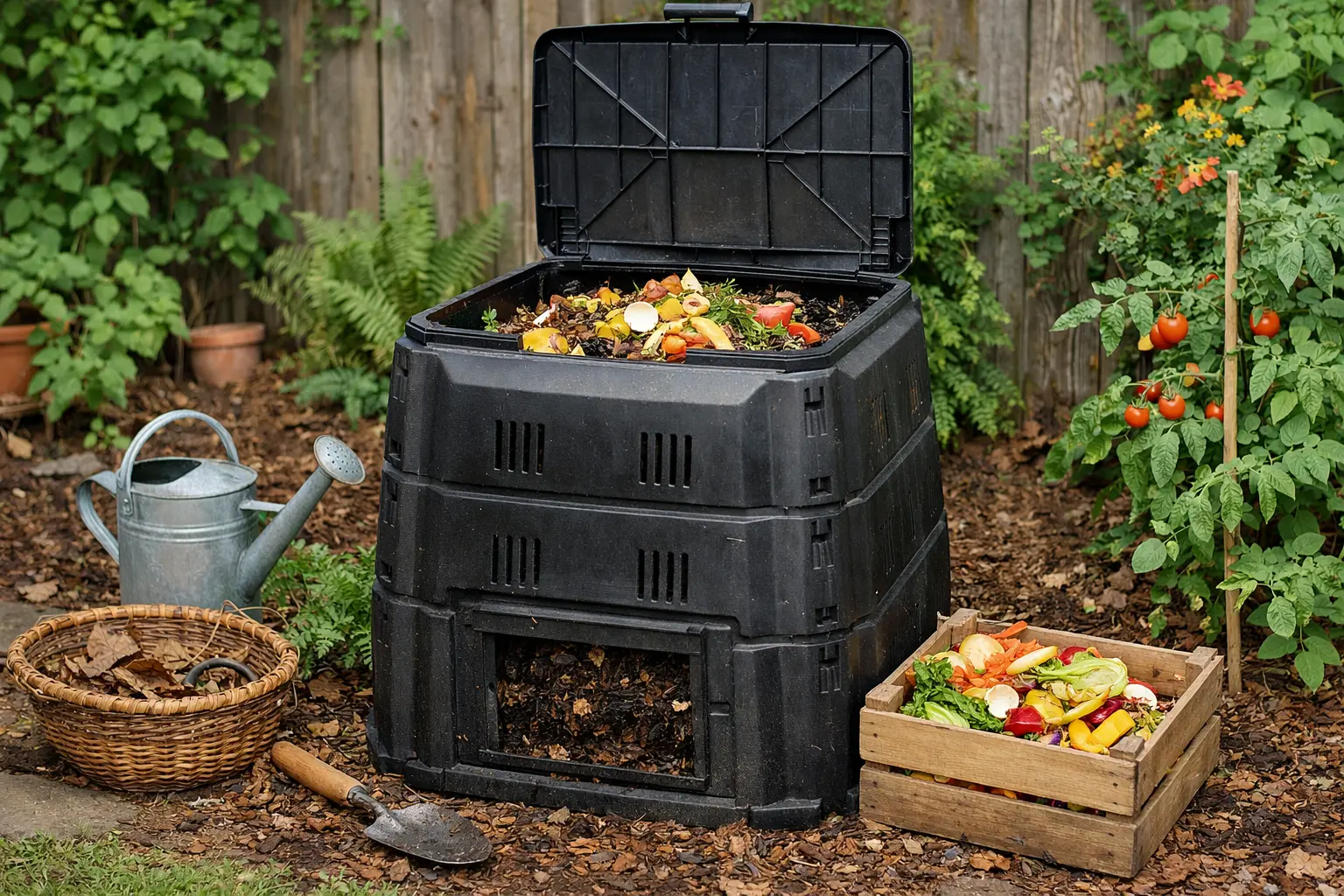
Home composting turns kitchen scraps and yard waste into nutrient-rich soil. This guide explains simple, actionable steps so beginners can start composting with minimal equipment and avoid common mistakes.
Why Choose Home Composting
Home composting reduces household waste and improves soil health without chemical fertilizers. It also lowers your trash volume and can save money on soil amendments.
Getting Started with Home Composting
Starting a compost system requires choosing a method, preparing a container or pile, and learning what materials to add. The basic idea is to balance carbon and nitrogen while keeping the pile moist and aerated.
Choose a Composting Method
Pick a method that fits your space and lifestyle. Each method works but has different care needs.
- Tumbler composting: Good for fast results and neat yards.
- Bin or pile composting: Flexible for yards of all sizes.
- Bokashi composting: Fermentation method for apartments and small kitchens.
- Vermicomposting: Uses worms for indoor or balcony setups.
Location and Bin Setup
Place your compost bin on bare soil where possible to allow organisms to move in. If using a bin, choose one with good drainage and ventilation.

For small spaces, use a sealed bokashi bucket or a worm bin under a sink or on a balcony. Keep the system accessible so you can add material and turn it when needed.
What to Compost and What Not
Understanding suitable inputs helps avoid odors and pests. Aim for a mix of green (nitrogen) and brown (carbon) materials.
Good items to compost:
- Fruit and vegetable scraps
- Tea bags, coffee grounds
- Yard waste: leaves, grass clippings
- Shredded paper and cardboard

Items to avoid or limit:
- Meat, dairy, and oily foods (attract pests)
- Diseased plants or invasive weeds
- Pet waste from carnivores
- Large woody branches (slow to break down)
Adding a thin layer of finished compost or garden soil to new compost layers introduces helpful microbes and speeds up decomposition.
Maintaining Your Home Compost
Maintenance focuses on three factors: carbon-to-nitrogen ratio, moisture, and aeration. A good balance leads to fast, odor-free decomposition.
Balancing Carbon and Nitrogen
A common guideline is a roughly 30:1 carbon to nitrogen ratio by weight. Practically, add more brown materials if the pile smells, and more green materials if decomposition slows.
Moisture and Aeration
Compost should feel like a wrung-out sponge—moist but not dripping. If it dries, add water and green materials. If it becomes soggy, add dry browns and turn it to introduce air.
Turn the pile or rotate the tumbler every 1–2 weeks to speed up composting. Vermicompost and bokashi systems require different handling; follow specific care for those methods.
How to Use Finished Compost
Finished compost looks dark, crumbly, and smells earthy. It is ready when original materials are no longer recognizable.
- Mix compost into garden beds: improves structure and nutrient content.
- Top dress lawns: thin layer applied in spring or fall helps soil health.
- Use as potting mix ingredient: blend with soil for container plants.
Troubleshooting Common Problems
Issues are usually simple to fix once you identify them. Here are quick checks for common problems:
- Bad smell: Add browns, increase aeration, avoid meat and dairy.
- Slow decomposition: Chop materials smaller, increase green inputs, or add moisture.
- Pests: Use a closed bin, bury food scraps, or use bokashi pre-treatment.
Case Study: Small Backyard Compost Success
Maria, a homeowner with a 200-square-foot yard, started a 60-gallon tumbler and a small compost pile in 2023. She collected kitchen scraps and yard trimmings and added shredded cardboard during the first month.
By following a weekly turning routine and balancing greens and browns, she produced usable compost in four months. Maria reduced household trash by 30 percent and used finished compost to top dress her vegetable beds, improving tomato yields the following season.
Practical Checklist to Start Home Composting
- Choose a method: tumbler, bin, bokashi, or worm composting.
- Set up in a convenient, well-drained location.
- Collect greens and browns in separate containers.
- Monitor moisture and aerate regularly.
- Use finished compost in garden beds and pots.
Home composting is a low-cost, high-impact habit that benefits your garden and the environment. Start small, observe the process, and adjust the inputs until your system becomes reliable.