
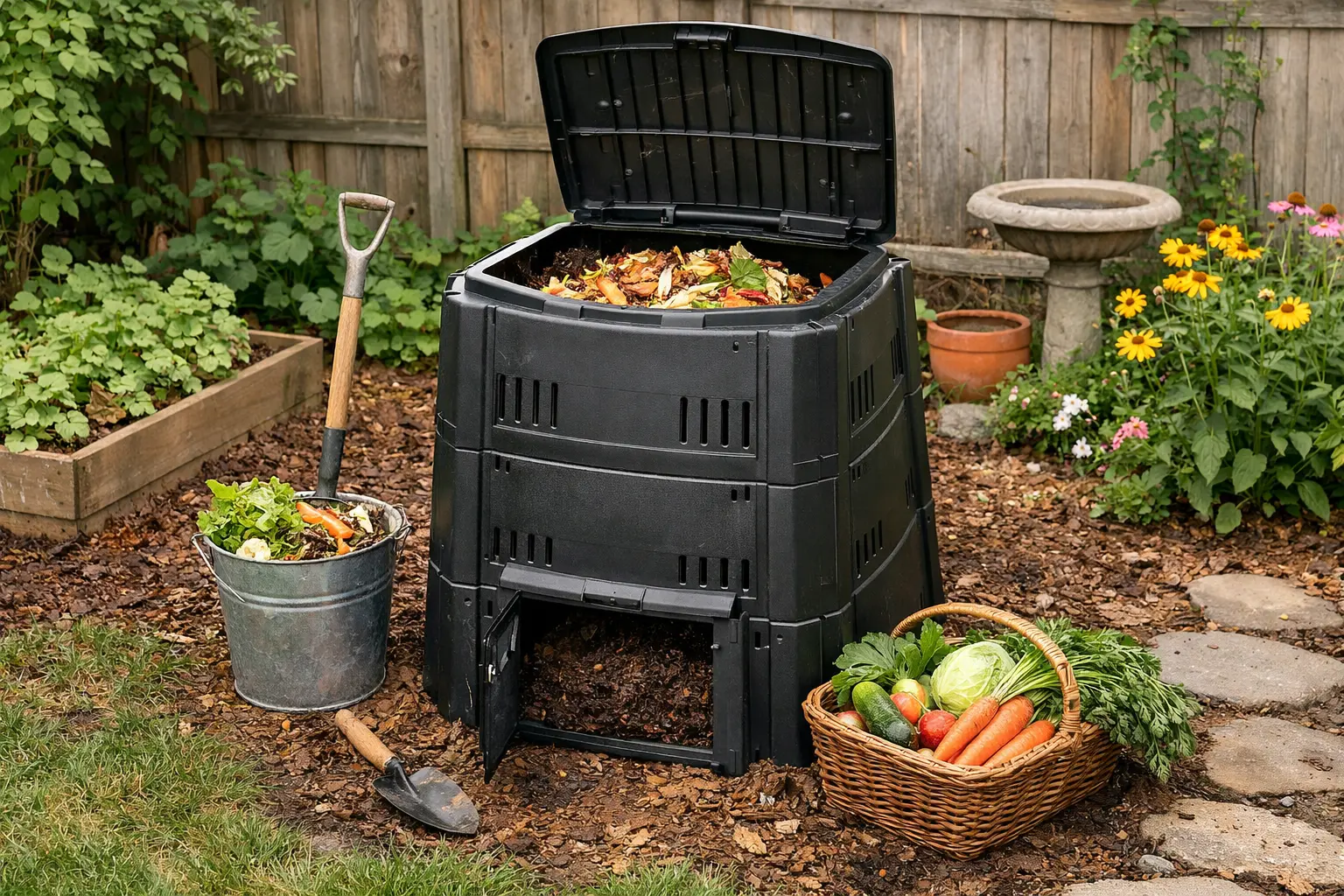
Start Home Composting for Beginners Without Confusion
Home composting is a low-cost way to turn kitchen scraps and yard waste into rich soil. This guide gives step-by-step instructions, simple rules, and common fixes you can use right away.
Home Composting for Beginners: Why It Matters
Composting reduces landfill waste and produces nutrient-rich material for houseplants and gardens. It saves money on fertilizer and improves soil structure over time.
- Reduces household waste volume.
- Improves plant health and water retention in soil.
- Supports sustainable gardening and reduces carbon footprint.
Choose a System for Home Composting for Beginners
Select a compost method that fits your living situation and time. Common systems work for yards, balconies, and indoor spaces.
- Basic compost bin: Cheap and low-tech, good for yards.
- Tumbler: Faster turning and less pest access.
- Vermicompost (worms): Great indoors or small spaces; produces high-quality castings.
- Bokashi: Fermentation method for apartments; needs a finishing step in soil.
Home Composting for Beginners: What to Add and Avoid
Balance two groups of materials: greens (nitrogen) and browns (carbon). A good mix speeds decomposition and reduces odors.
- Greens (add regularly): fruit and vegetable scraps, coffee grounds, fresh grass clippings.
- Browns (add often): dry leaves, shredded paper, cardboard, straw.
- Avoid: meat, dairy, oily foods, pet waste, diseased plants, and large woody branches.
Aim for roughly 2 parts browns to 1 part greens by volume, or a carbon to nitrogen ratio near 30:1 for hot composting.
Basic Steps to Start Home Composting for Beginners

Follow these simple steps to get a working pile or bin within a day. Regular small actions keep the process moving.
- Pick a location: a shaded, level spot near water access or a balcony corner for small bins.
- Assemble materials: add 4–8 inches of browns as a base layer in your bin.
- Add greens in thin layers and cover with browns to reduce flies and smell.
- Maintain moisture: aim for a damp sponge feel; add water or dry materials to adjust.
- Turn or mix every 1–2 weeks for faster decomposition (less often for cold composting).
- Harvest finished compost in 2–12 months depending on method and conditions.
A well-managed hot compost pile can reach temperatures of 130°F to 160°F (54–71°C), which helps kill weed seeds and many plant pathogens.
Troubleshooting for Home Composting for Beginners
Problems are usually easy to fix by adjusting balance, moisture, or aeration. Check these symptoms and solutions.
- Bad smell: Add more browns, turn the pile, and cover fresh food scraps.
- Pests: Bury scraps under browns, use a sealed bin, and avoid attracting animals with meat or oily foods.
- Too wet: Mix in dry browns and improve drainage or add ventilation holes.
- Slow decomposition: Increase surface area by chopping materials and accelerate by turning regularly.
Home Composting for Beginners: How to Know Compost Is Ready

Ready compost is dark, crumbly, and smells earthy. You should not be able to identify most original materials.
- Texture: soft and soil-like.
- Smell: pleasant, like forest floor.
- Color: uniform dark brown to black.
Case Study: Small Balcony Success
Sarah lives in a two-bedroom apartment and wanted to reduce food waste. She started a small vermicompost bin on her balcony using red wiggler worms.
Over three months she added vegetable peels, coffee grounds, and shredded paper. Sarah harvested about 10 liters of compost, used it to top-dress potted herbs, and reduced weekly kitchen waste by roughly 60%.
Key actions that worked: keeping the bin shaded, maintaining moisture, and feeding small pieces to the worms to avoid odors.
Tips to Use Compost from Home Composting for Beginners
Compost can be used in many simple ways to benefit plants and soil. Apply it as a slow-release amendment.
- Mix 10–30% compost into potting mixes for houseplants and containers.
- Top-dress garden beds with 1–2 inches in spring or fall.
- Make compost tea by steeping finished compost in water for liquid feeding.
Final Checklist for Home Composting for Beginners
Use this quick checklist to keep the system healthy and productive.
- Choose a bin that fits your space and needs.
- Balance greens and browns and monitor moisture.
- Turn the pile when possible to speed composting.
- Harvest and use finished compost regularly.
Starting composting at home is a practical step toward waste reduction and healthier soil. With the right balance and simple care, most beginners can produce useful compost within months.