
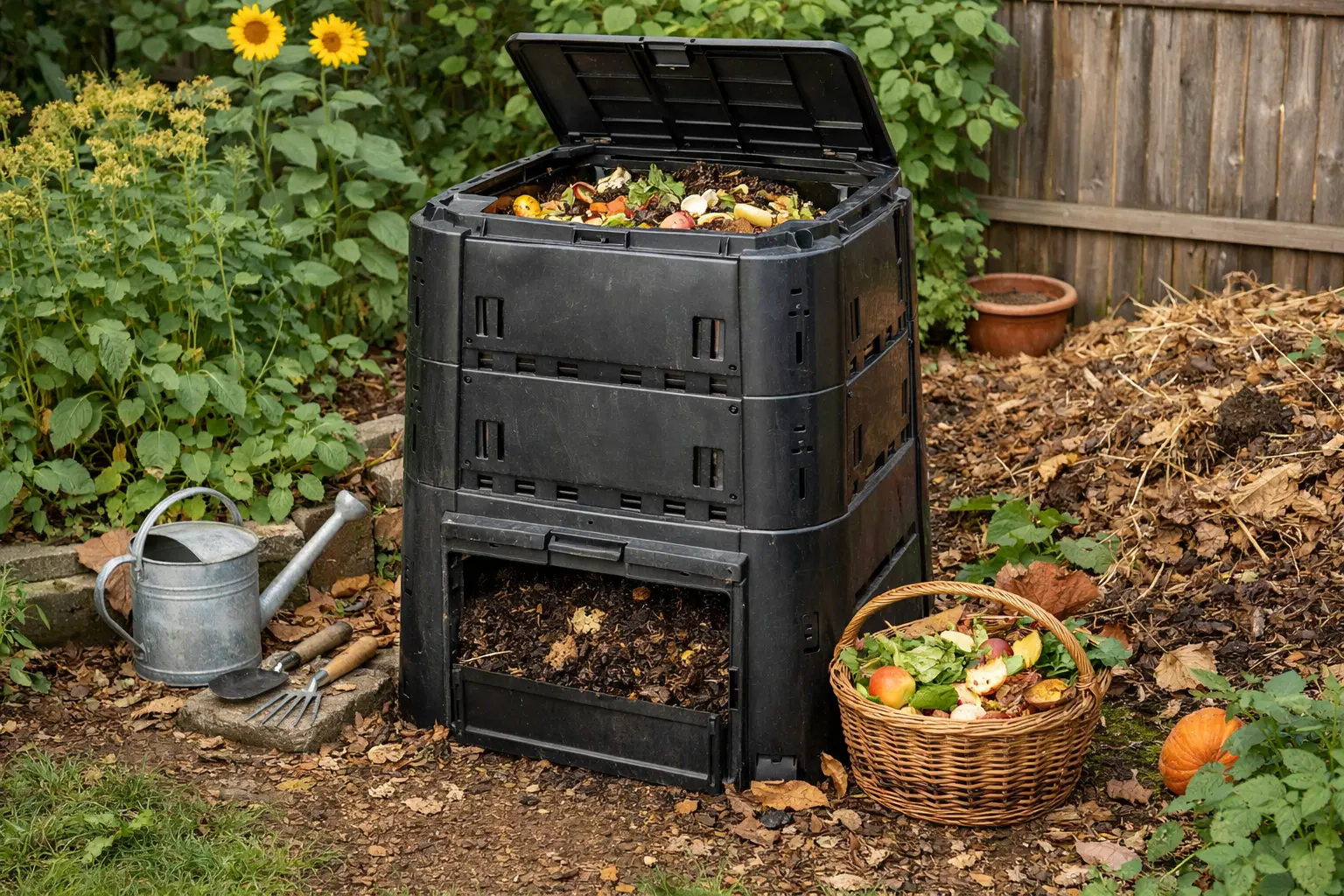
Composting at home turns kitchen and yard waste into valuable soil amendment. This guide explains simple methods, materials, and troubleshooting so you can start composting with confidence.
Home Composting Basics
Home composting is the controlled decomposition of organic matter like food scraps and yard trimmings. The result is dark, crumbly compost that improves soil structure and plant health.
Key ingredients: greens and browns

Successful compost needs a balance of nitrogen-rich “greens” and carbon-rich “browns.” Greens supply protein and moisture; browns provide structure and carbon.
- Greens: fruit and vegetable scraps, coffee grounds, fresh grass clippings
- Browns: dry leaves, straw, shredded paper, wood chips
A good starting ratio is roughly 2 parts browns to 1 part greens by volume. Adjust if the pile is too wet or smells.
Choosing a Home Composting System
Pick a system that fits your space, budget, and time. Common options include cold piles, enclosed bins, tumblers, and worm (vermicompost) systems.
Cold pile or simple heap

Cold piles are easiest: pile materials in a corner and let them decompose slowly. They require minimal work but take longer to finish.
Enclosed bin and tumblers
Bins keep pests out and look neater. Tumblers speed up mixing and are cleaner to manage. Turn or rotate weekly for faster results.
Vermicomposting for small spaces
Worm bins use red worms to break down food scraps quickly and are ideal for apartments. They produce nutrient-rich worm castings with minimal odor.
How to Start Home Composting: Step-by-Step
- Choose a location with some shade and good drainage.
- Select a system: pile, bin, tumbler, or worm box.
- Layer a base of coarse browns to aid airflow.
- Add greens and browns in roughly a 1:2 ratio.
- Keep the pile moist like a wrung-out sponge.
- Turn or mix every 1–2 weeks to add oxygen.
- Harvest finished compost when it is dark and crumbly (2–12 months).

Small kitchen collection: keep a sealed countertop container for scraps and empty into the outdoor system daily.
Home Composting Troubleshooting
Bad smells
Smells usually mean too much moisture or too many greens. Add dry browns, aerate the pile, and mix in coarse material like twigs.
Pests or flies
Use a sealed bin or bury food scraps in the center of the pile. Avoid meat, dairy, and oily foods that attract animals.
Slow decomposition
Speed up breakdown by increasing surface area: chop or shred materials, maintain moisture, and turn the pile more often.
Using Finished Home Compost
Finished compost enriches garden beds, potted plants, and lawn topdressing. Mix compost into soil at seeding time or use as a mulch layer to retain moisture.
- Vegetable beds: mix 1–2 inches of compost into top 6–8 inches of soil.
- Potting mix: blend one part compost with two parts potting soil for added nutrients.
- Mulch: spread 1–3 inches of compost around established plants.
Composting diverts up to 30% of household waste from landfills and reduces methane emissions. Backyard compost can also cut fertilizer costs for gardeners.
Real-World Example: A Small Home Compost Case Study
Case: Sarah, a city homeowner with a small backyard, started using a 60-gallon tumbling composter. She added kitchen scraps and shredded leaves and turned the tumbler once a week.
After four months Sarah harvested dark compost that she mixed into two vegetable beds. She reported better water retention and healthier tomato plants the next season.
By composting, Sarah reduced her weekly trash by about 20% and saved roughly $30 in store-bought soil and amendments that year.
Practical Tips for Ongoing Home Composting
- Keep a small sealed container in the kitchen to limit trips and odors.
- Shred yard waste and paper to speed decomposition.
- Monitor moisture: cover during heavy rain, water during dry spells.
- Record what you add and when to learn what balance works best.
- Use a thermometer if you want faster, hotter composting (130–160°F is common for hot composting).
Home composting is adaptable. Start small and refine your process over time. Even modest efforts reduce waste and yield valuable soil for your plants.